Split-level Farmhouse
Type: Historic Farmhouse Extension & Renovation
Client: Private
Location: Dawestown, Dundalk, Co. Louth
Stage: Planning Granted
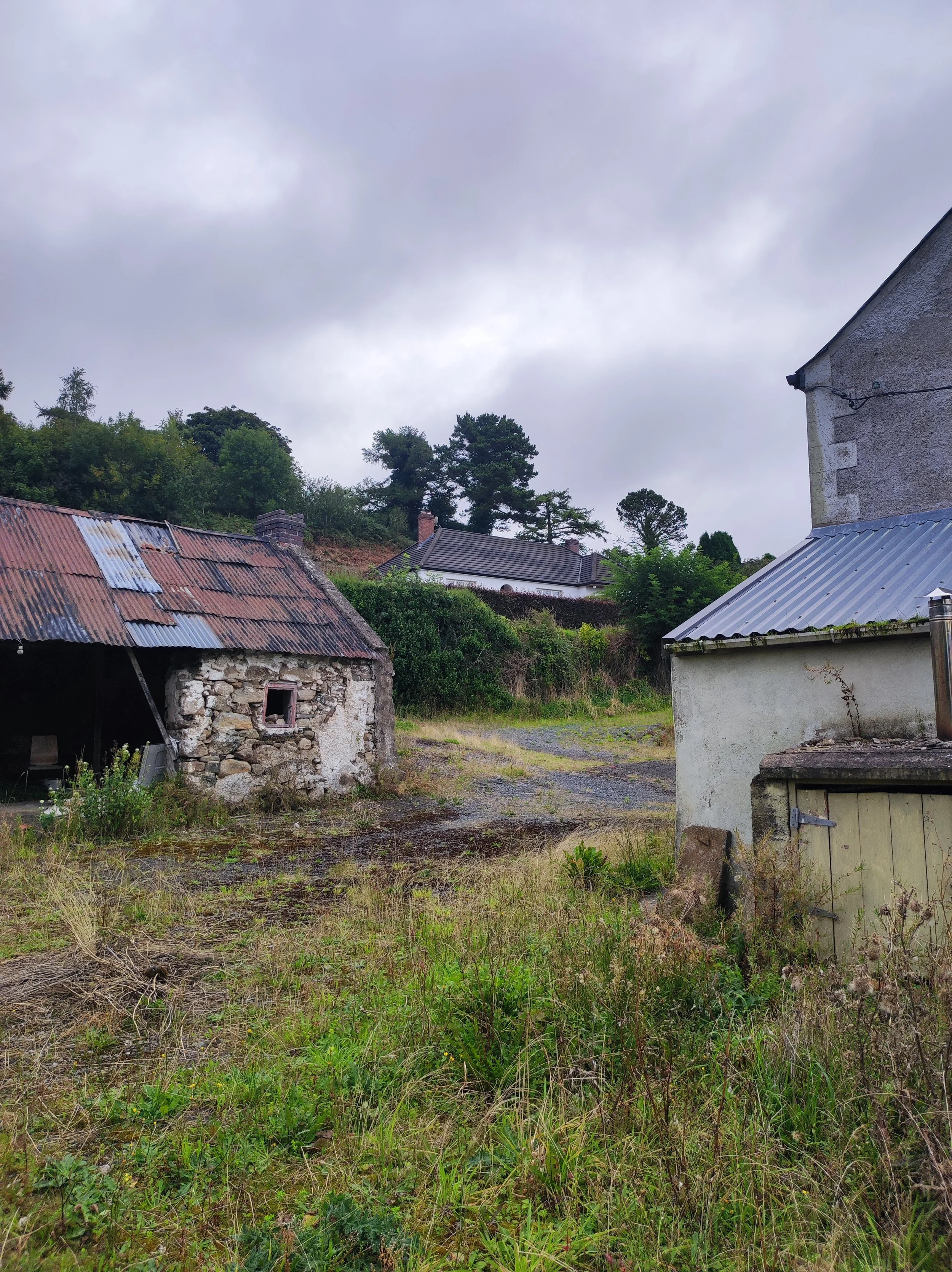
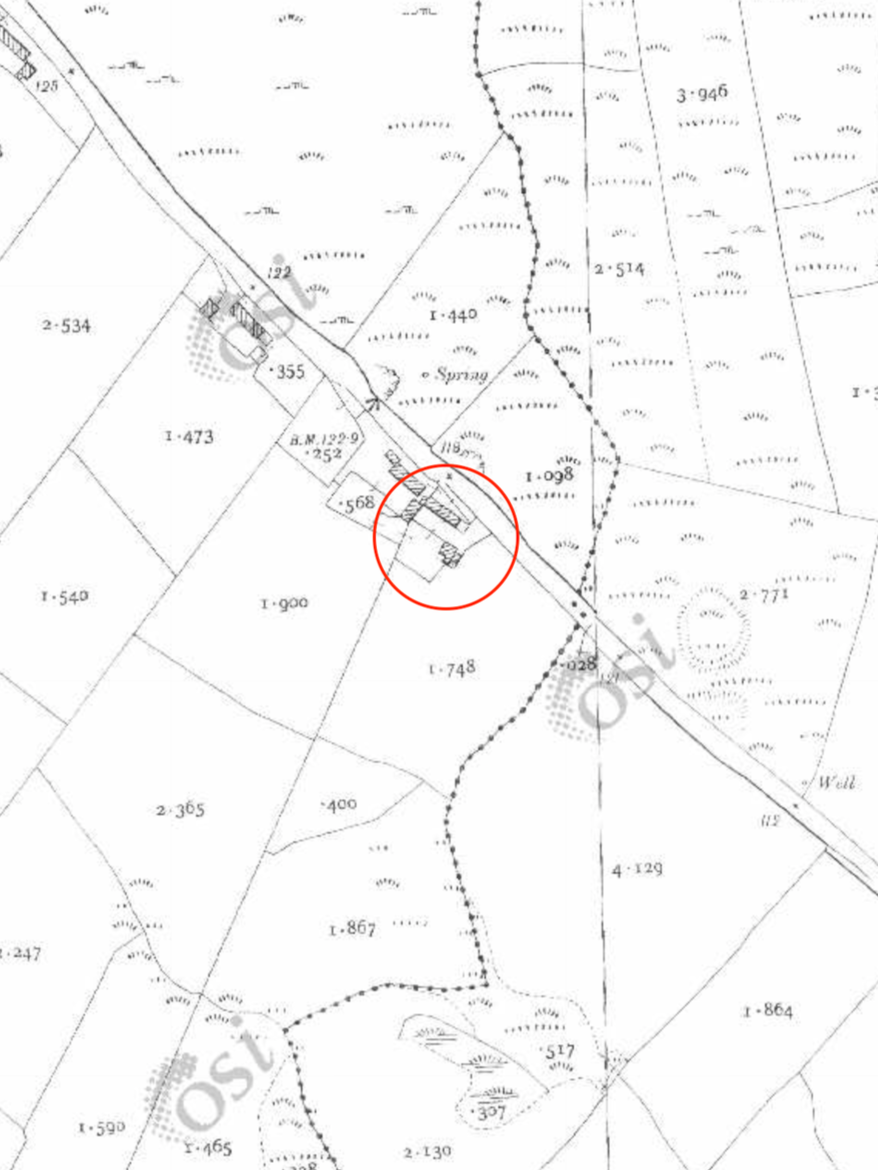
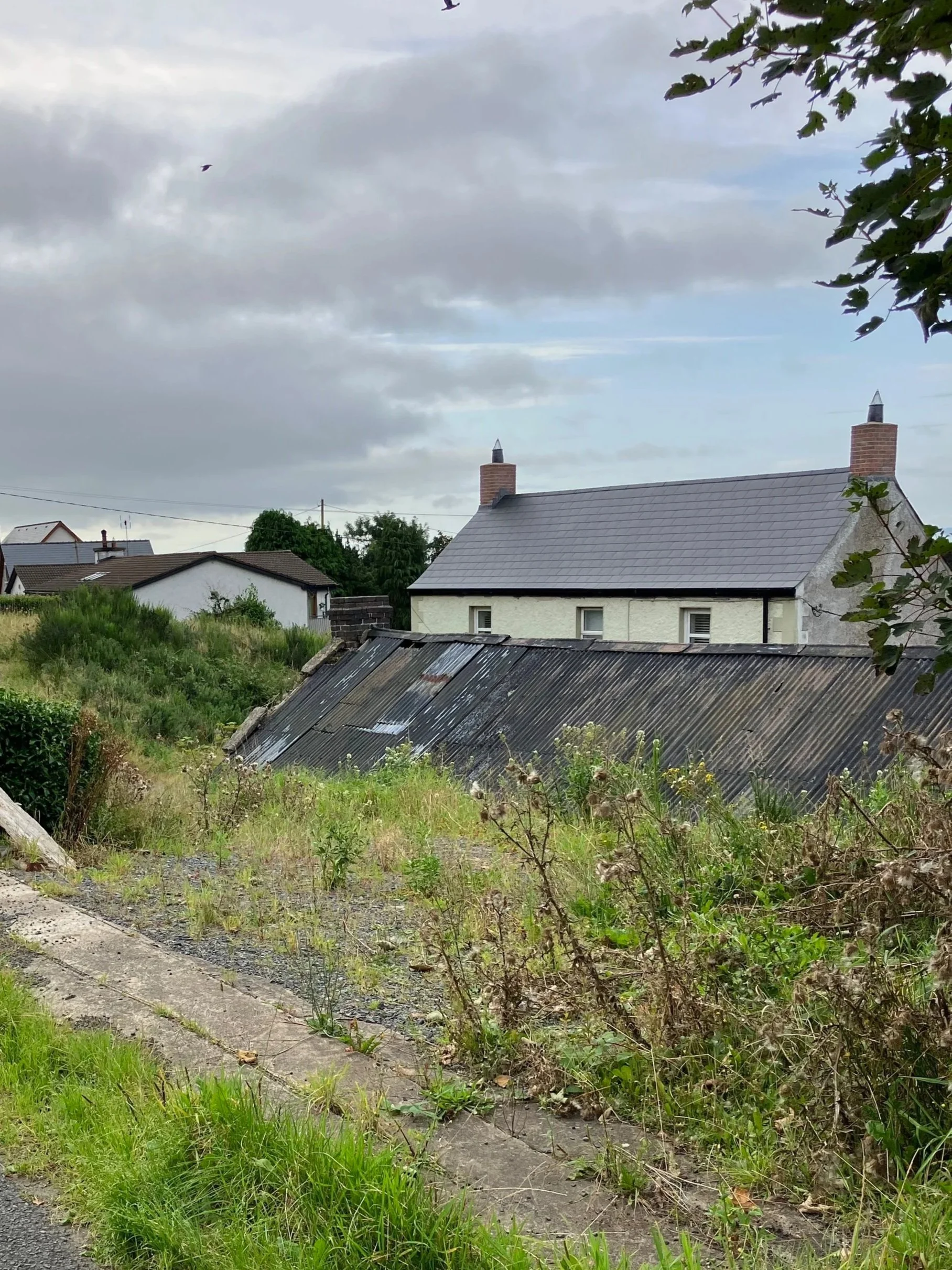
This steep rural farm sitting high over Dundalk Bay had been in the client’s family for generations. The site is approached from Dawestown and the farmland slopes down towards Dundalk Bay.
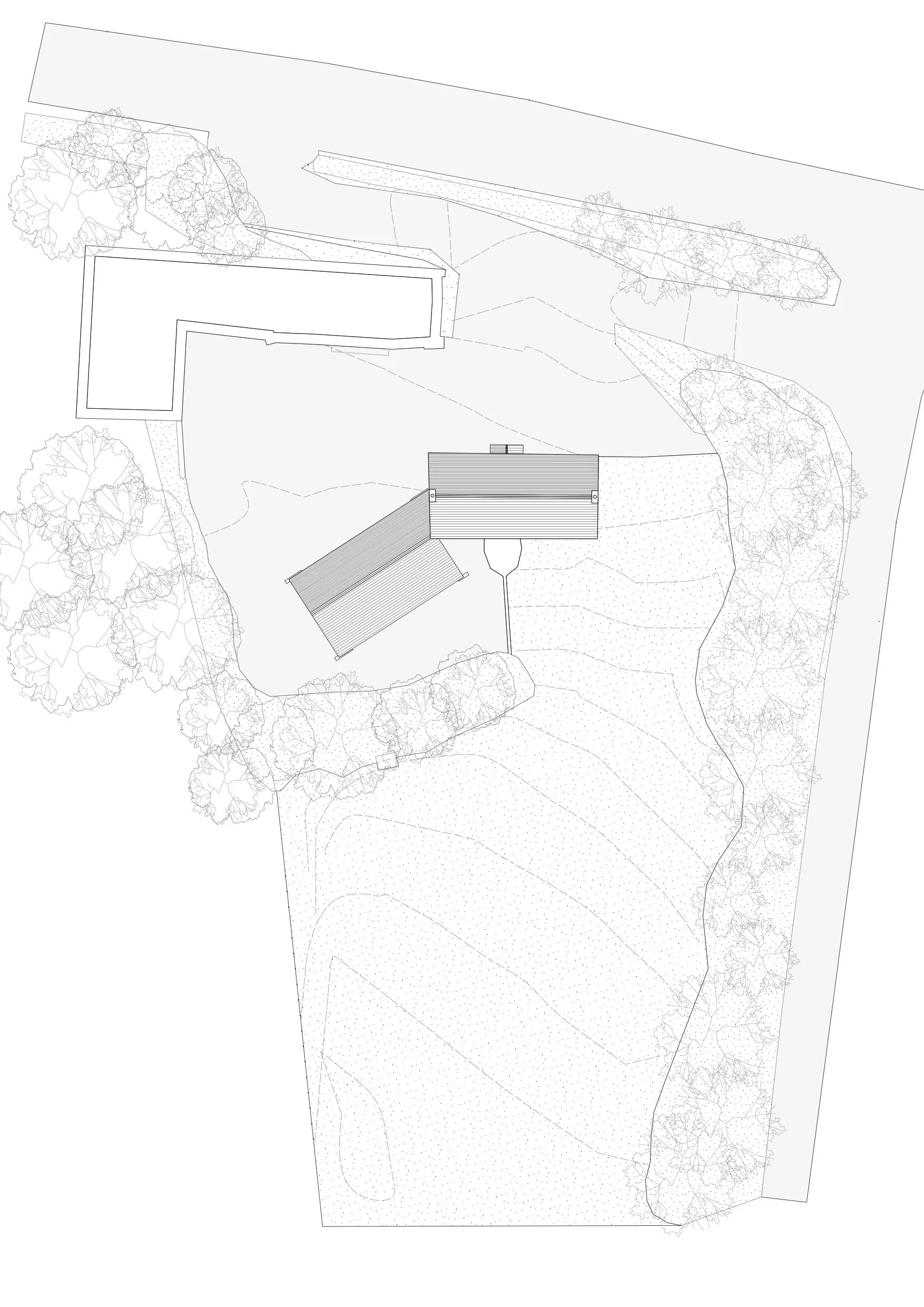
A collection of farm buildings from multiple eras are dotted across the site, some straddling and holding the contours. Harnessing views to the Bay below drove the concept for this site strategy.
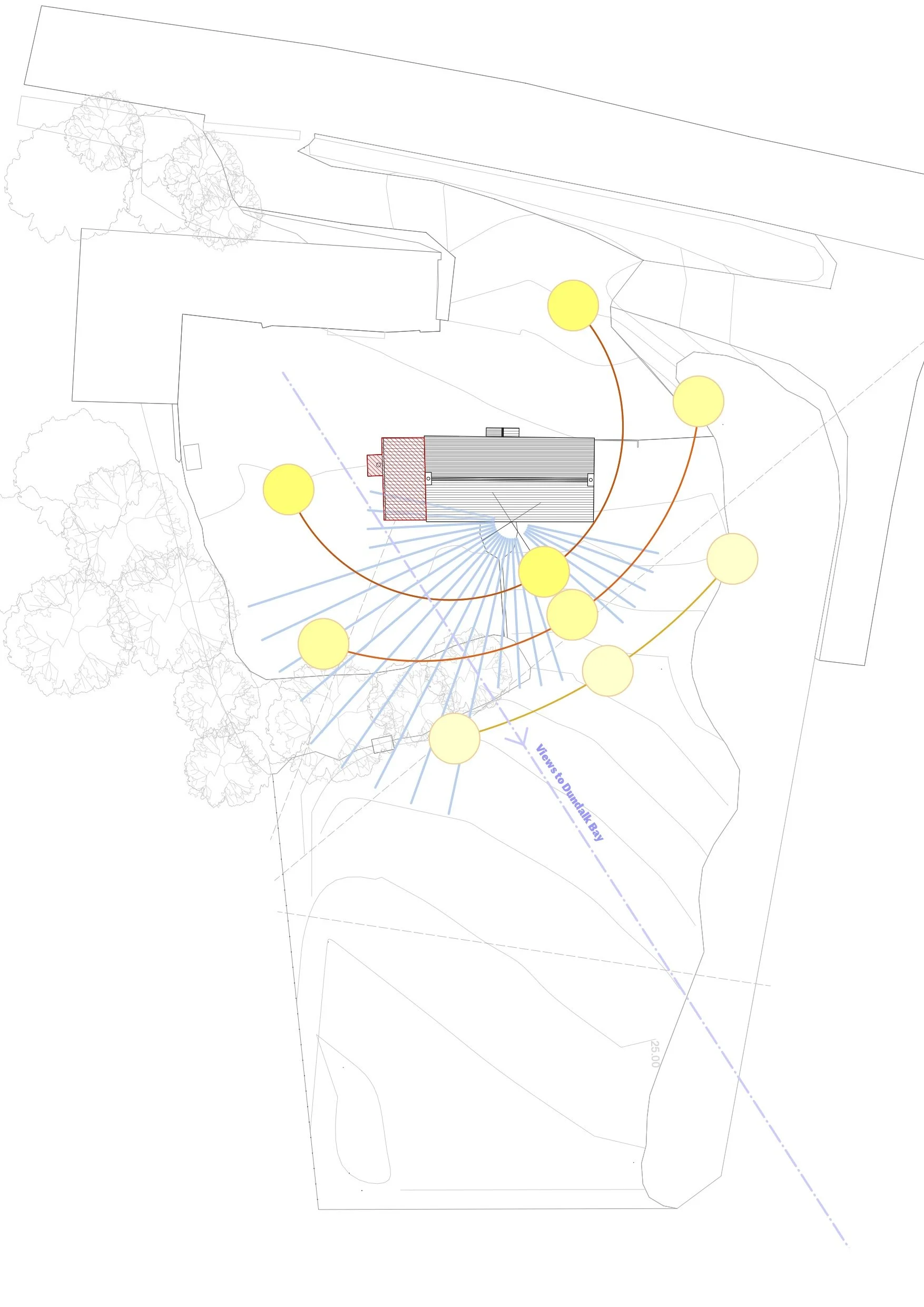
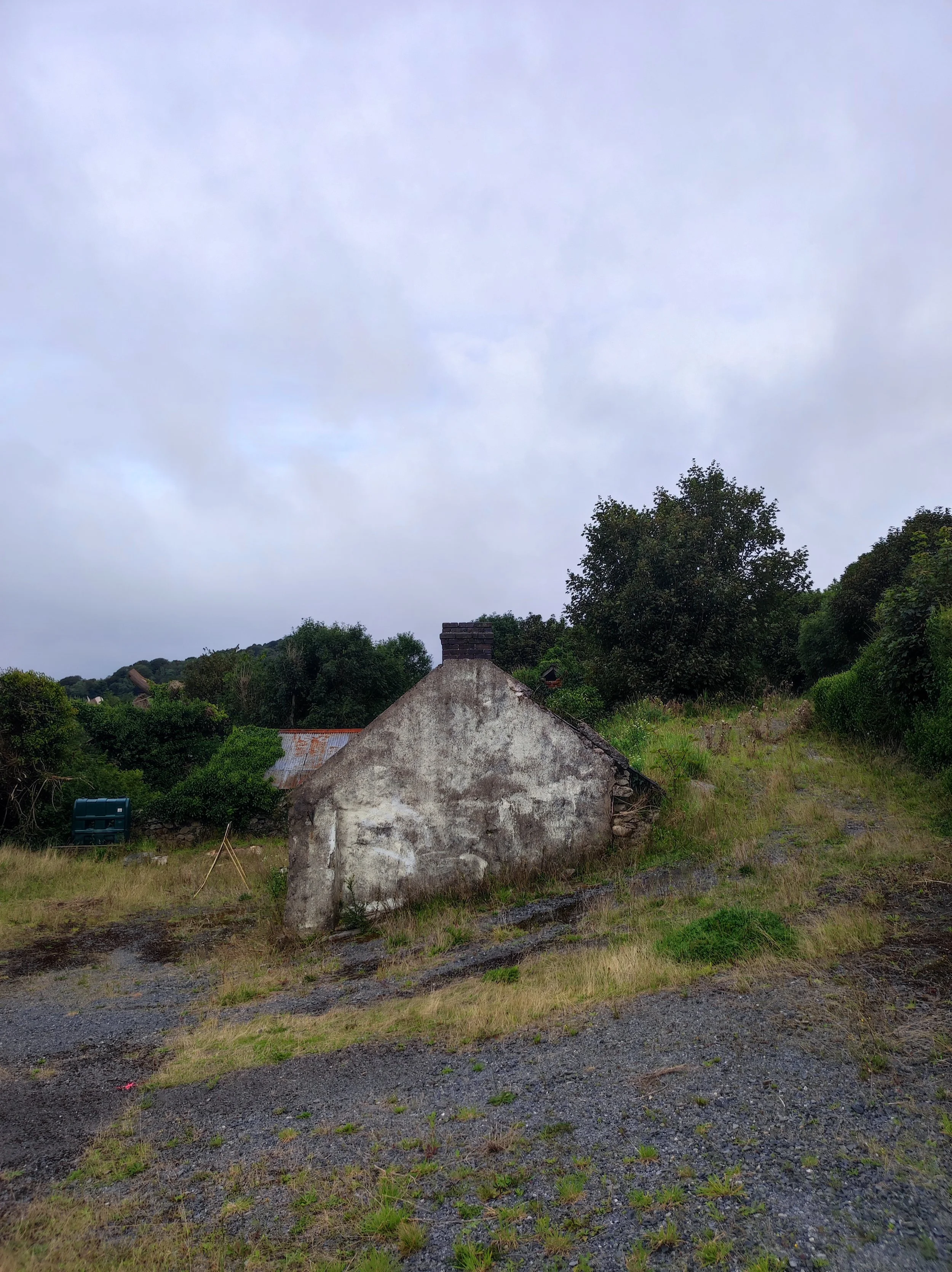
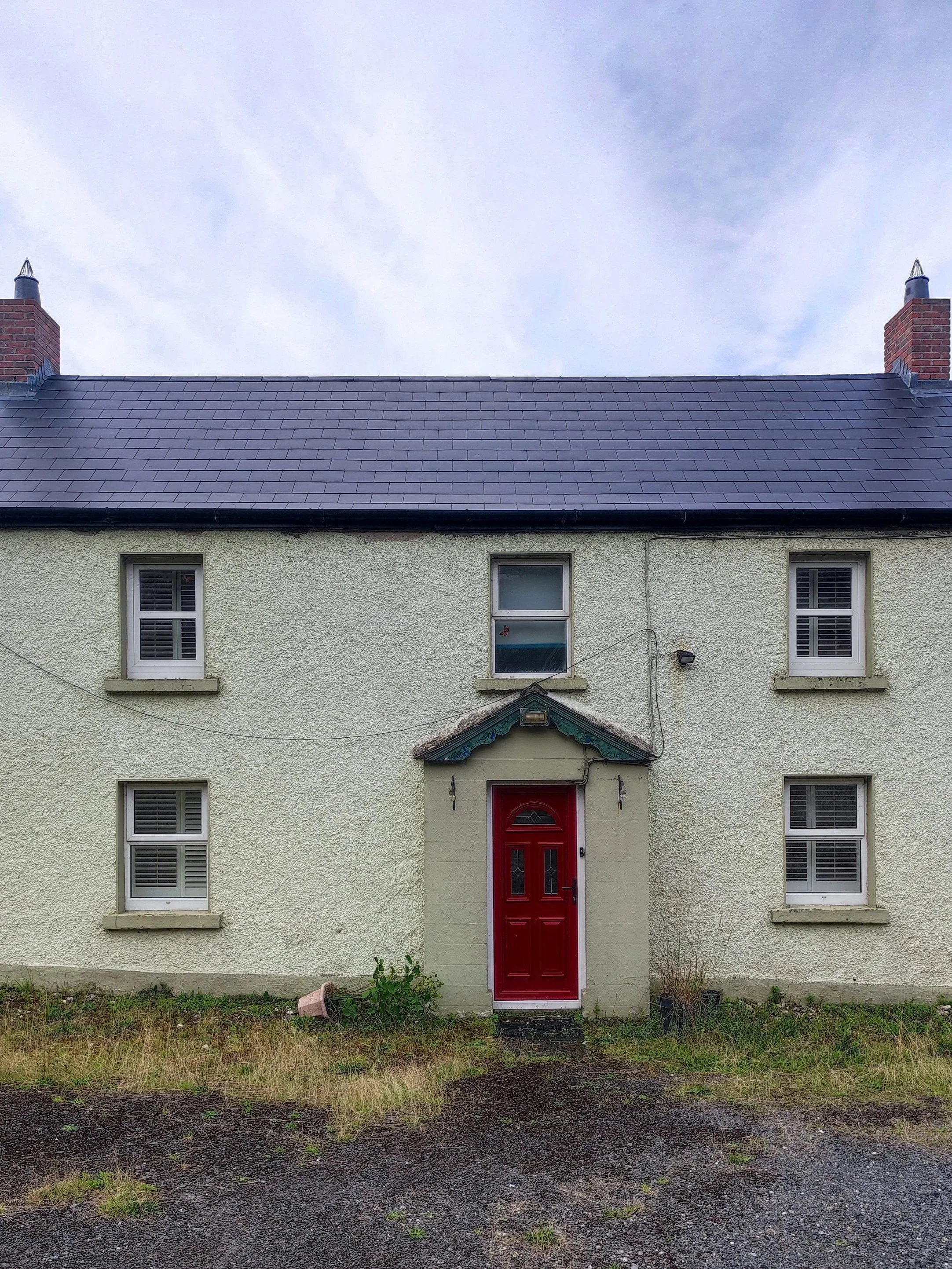

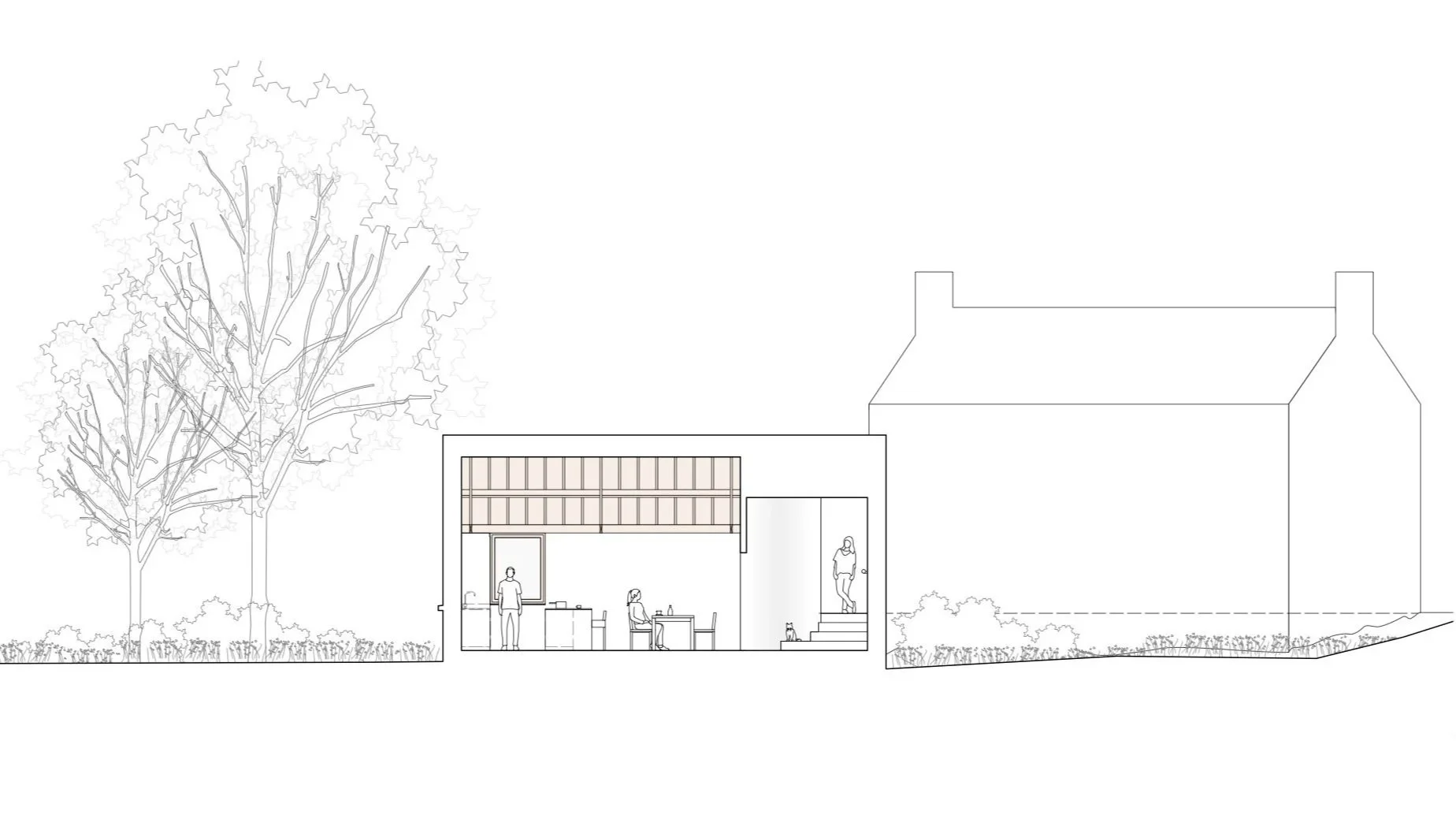
The existing two storey farmhouse was retained with very minimal interventions. The lean-to extension was in a poor state of repair and was removed. This opened up the house to views over Dundalk Bay through shifting the axis of the new kitchen, dining and bathroom extension.
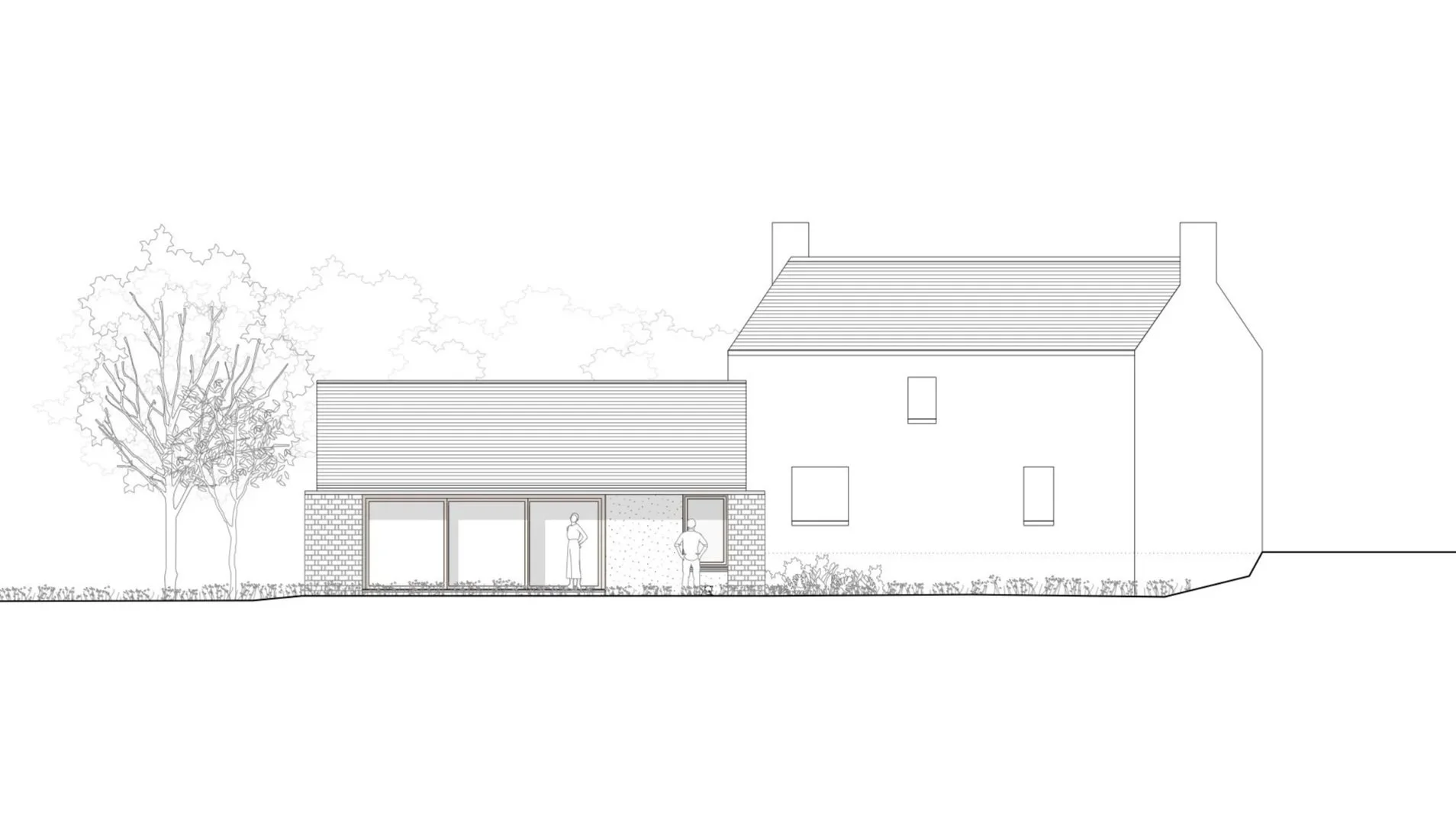
Through utilising the existing contours of the site, the new extension sits lower than the farmhouse, thus appearing subservient.
The material palette of dashed render walls, slate roof and white brick piers compliments the surrounding context while distinguishing the existing buildings from the more contemporary extensions.
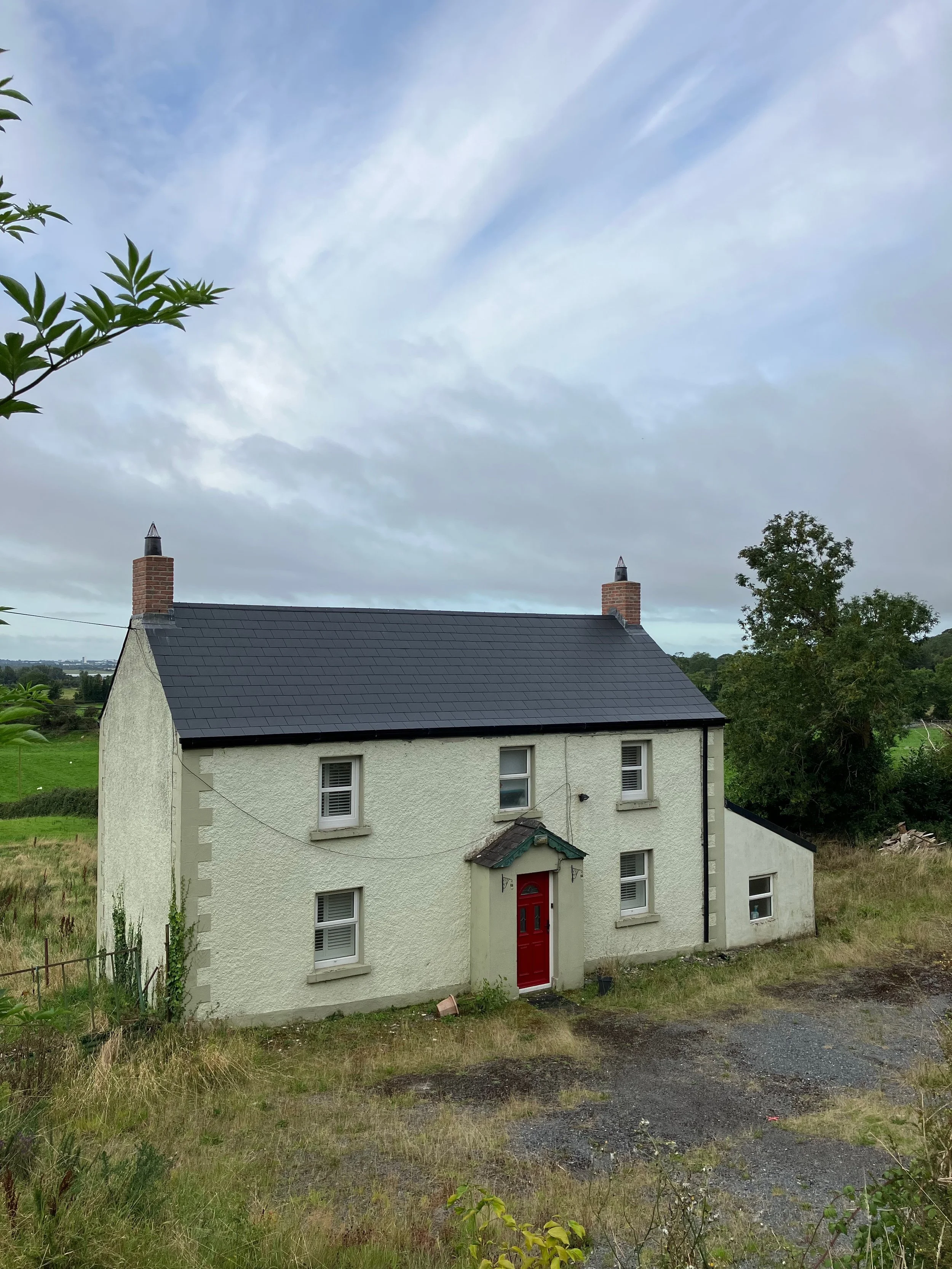
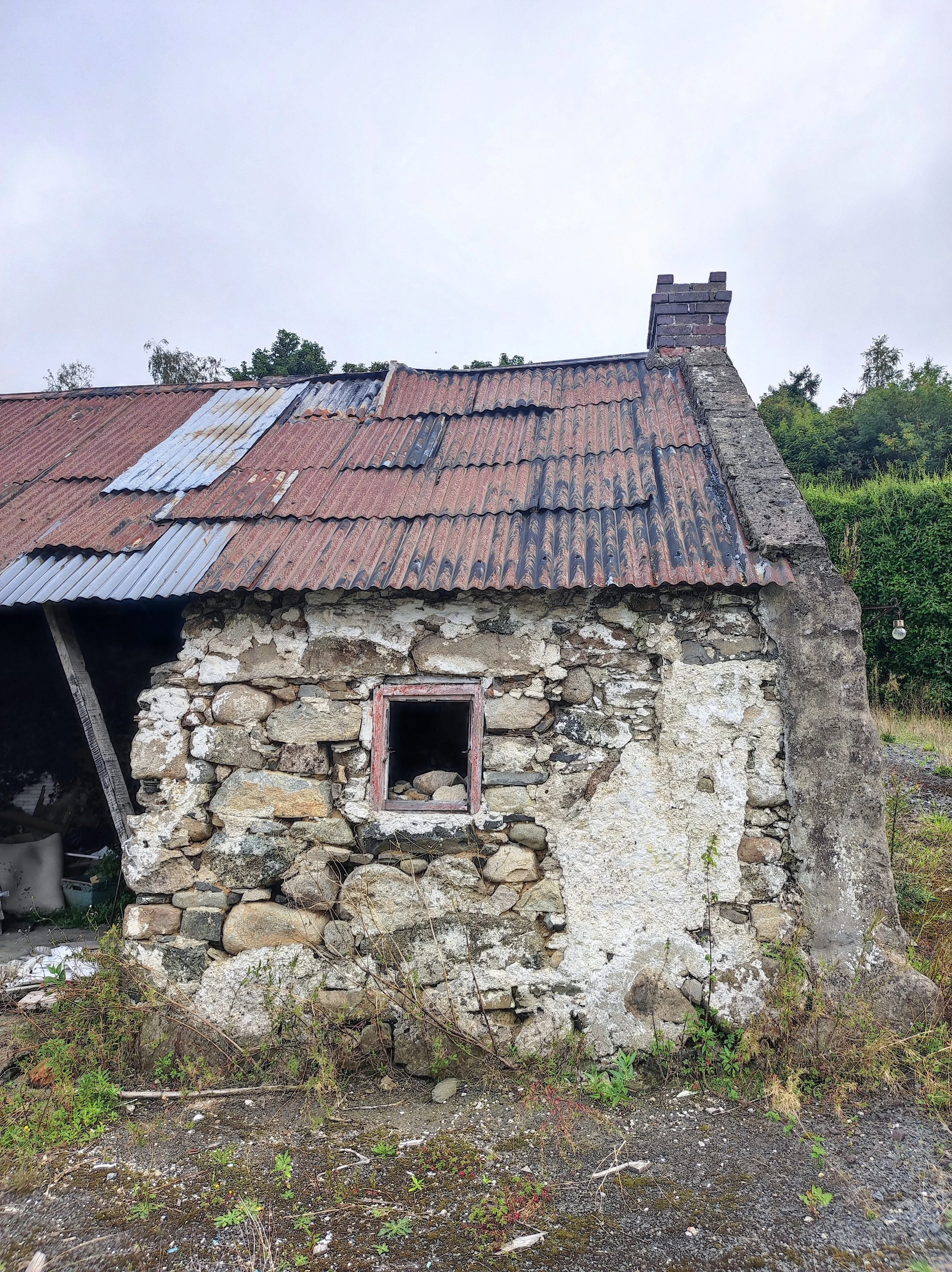
The client’s brief was to increase the farmhouse’s energy performance and to extend it to be more comfortable and functional for a family of 4 with regular visitors.
The extension follows fabric‑first sustainable principles: the use of natural materials and insulations, the careful repair and thermal upgrades appropriate for a historic structure, and arranging the plan to optimise passive solar gains from the site’s orientation.
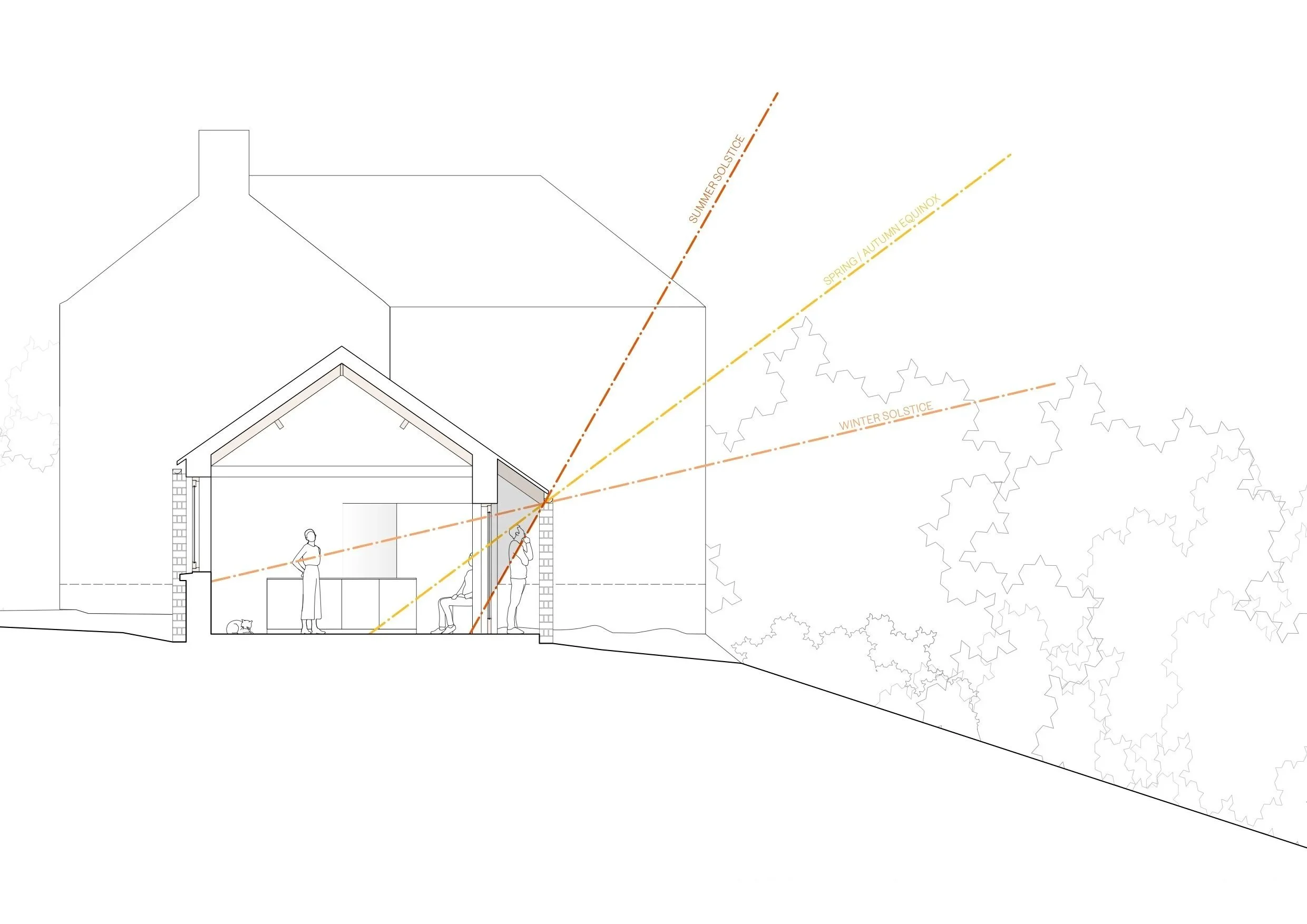
The roof and piers of the extension work in tandem with the sites contours and orientation. The large overhanging roof forms a sheltered external space off the new kitchen which captures low light in the Winter months and shelters the occupants from the high sun in the Summer.
The white brick piers mimic the texture of the old farm buildings on the site. They hold back the landscape while supporting the roof and the gutters. Rain water is diverted to a new ‘rain garden’ caught between the angle of the new extension and the existing farmhouse.
The sensitive design approach will allow this landholding to be used by generations to come.