Reimagining Elderhood

Type: Public Engagement & Research

Client: Self Organised Architecture (SOA)

Location: Balbriggan, Co. Dublin

Stage: Completed

Published: Architecture Ireland

Exhibited: The Project Arts Centre and Open House Dublin, Curved Street Gallery

Watch the full film here

Reimagining Elderhood treats the suburban housing estate not as a static development, but as an aging landscape that requires structural and social future-proofing. Selected as one of three national practices by Self Organised Architecture (SOA) and funded by the Arts Council of Ireland, we used this project to build a scalable methodology for public participation and spatial policy critique.

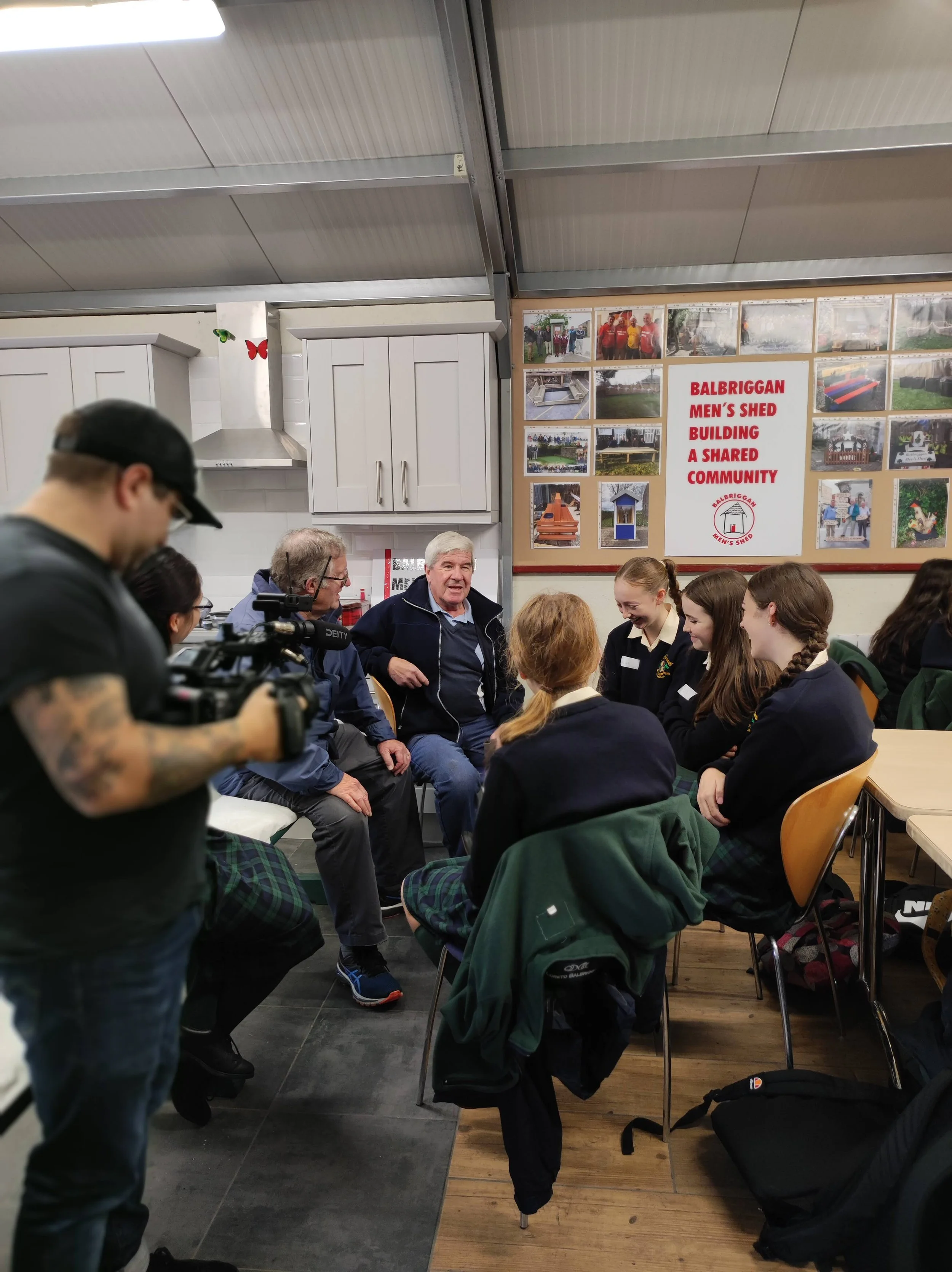
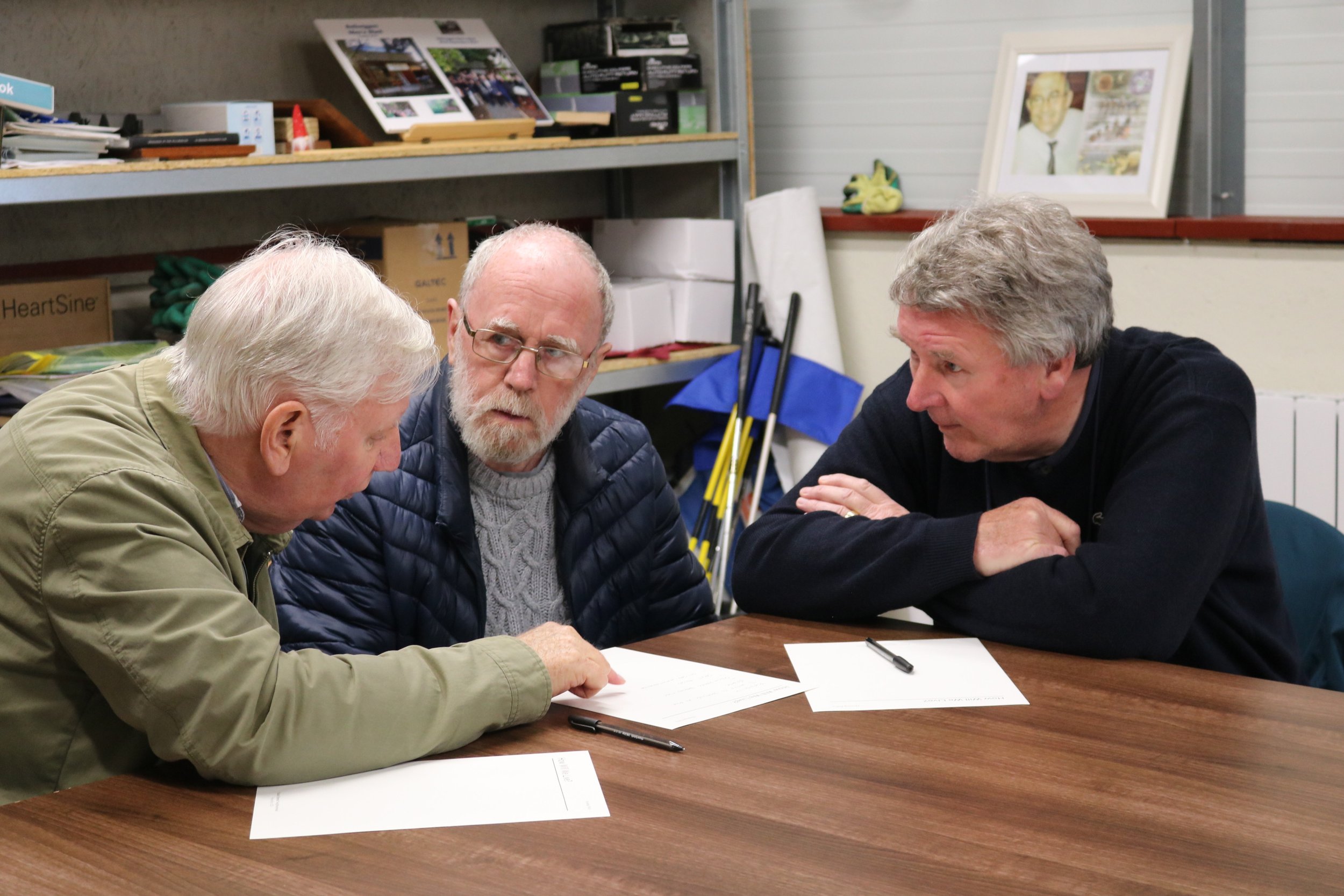
Rather than addressing the housing crisis in demographic isolation, we approached the project as an intergenerational dialectic. We brought together Transition Year students from Loreto Secondary School and members of the Balbriggan Men's Shed to co-design visions for shared community spaces.
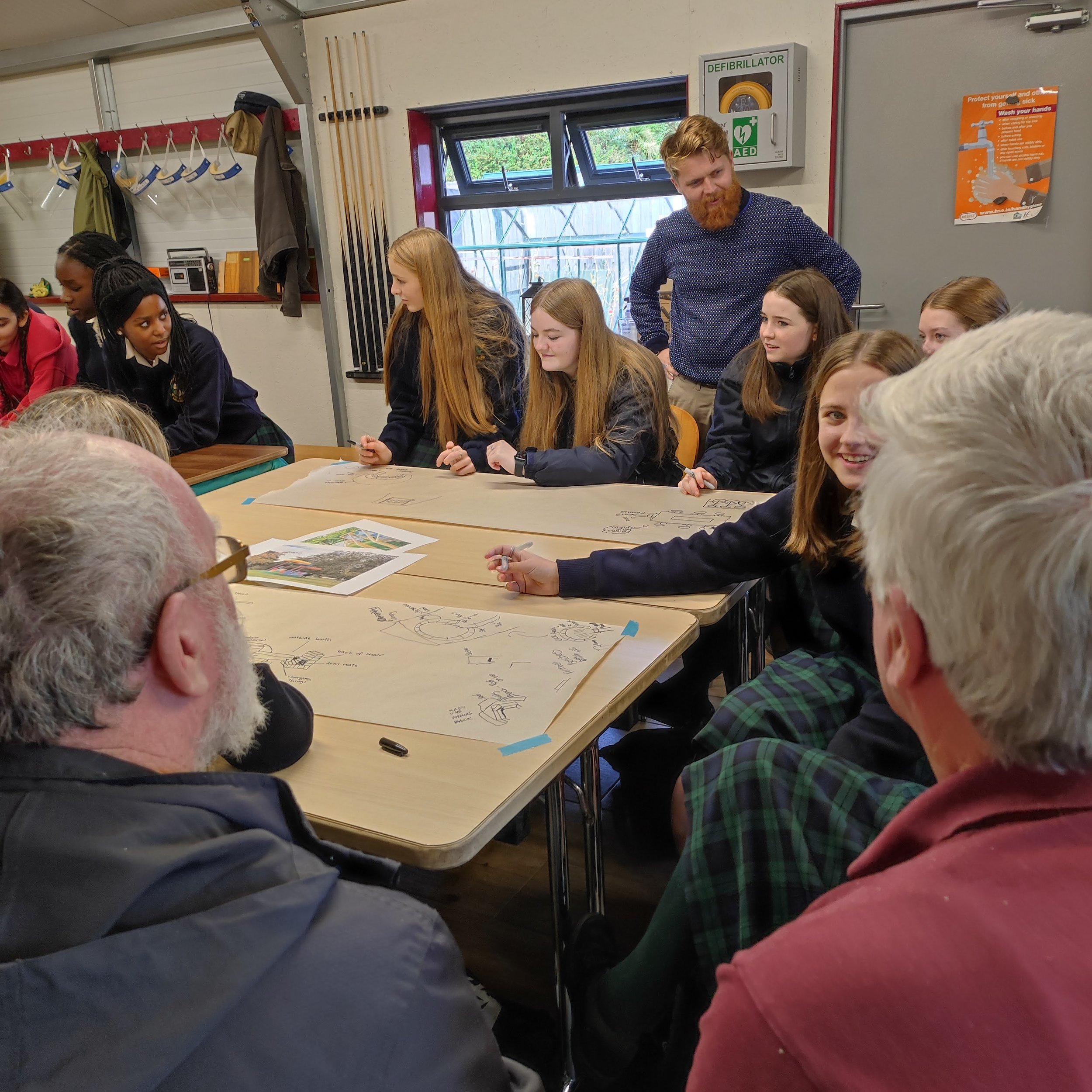
Group of students and older adults engaged in a discussion or presentation in a classroom or community center setting, with drawings and photos on the table.
Colorful graphic design with the words 'Re-imagining Elderhood' and various abstract shapes representing community, nature, and growth.
Flyer for Balbriggan Beach Day on Sunday, August 20th, with details of a film screening event at RNLI Boathouse under the viaduct bridge from 12 pm to 3 pm, featuring aerial view of a coastal town with houses, green spaces, and the sea in the background.
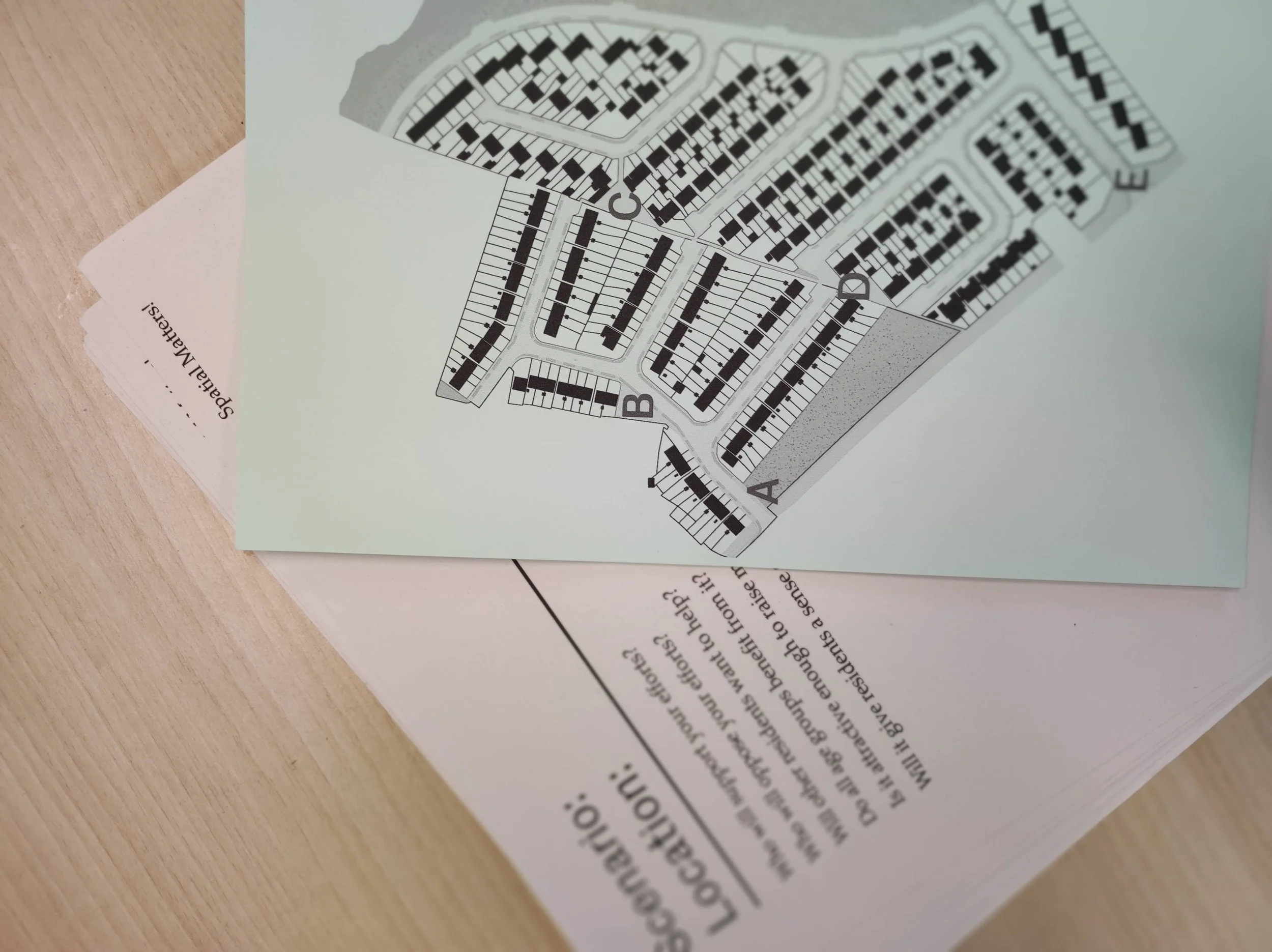
A detailed map of a residential development with streets and plots, placed on top of a document with partially visible text on a wooden surface.
A group of people, including children in school uniforms and a few adults, sitting in a room with a sign that reads "Balbriggan Men's Shed Building a Shared Community". One man is speaking to the group, and a cameraman is filming the scene.
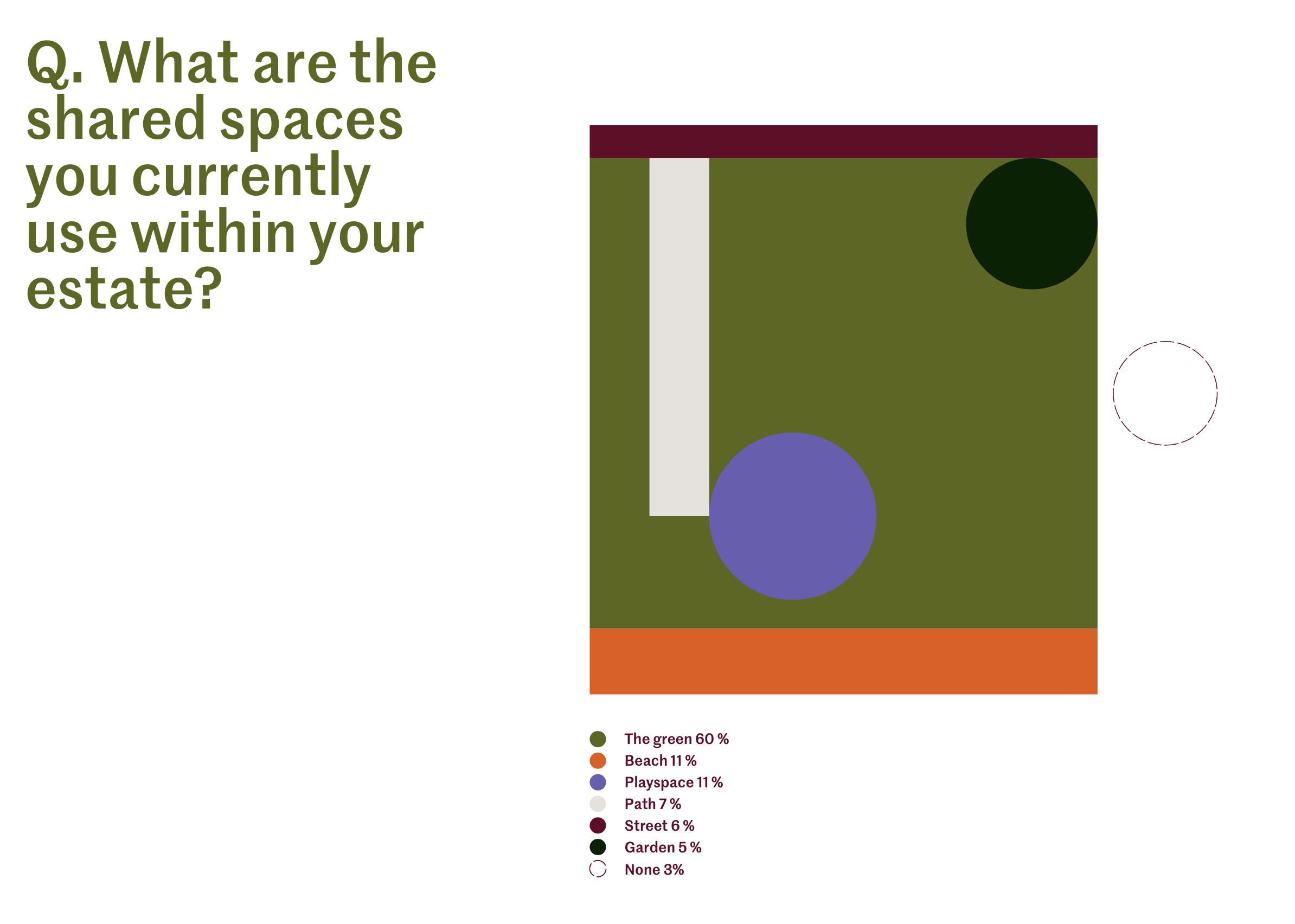
Pie chart showing the most common shared spaces used within estates, including the green space, beach, play space, path, street, garden, and none, with their respective percentages.
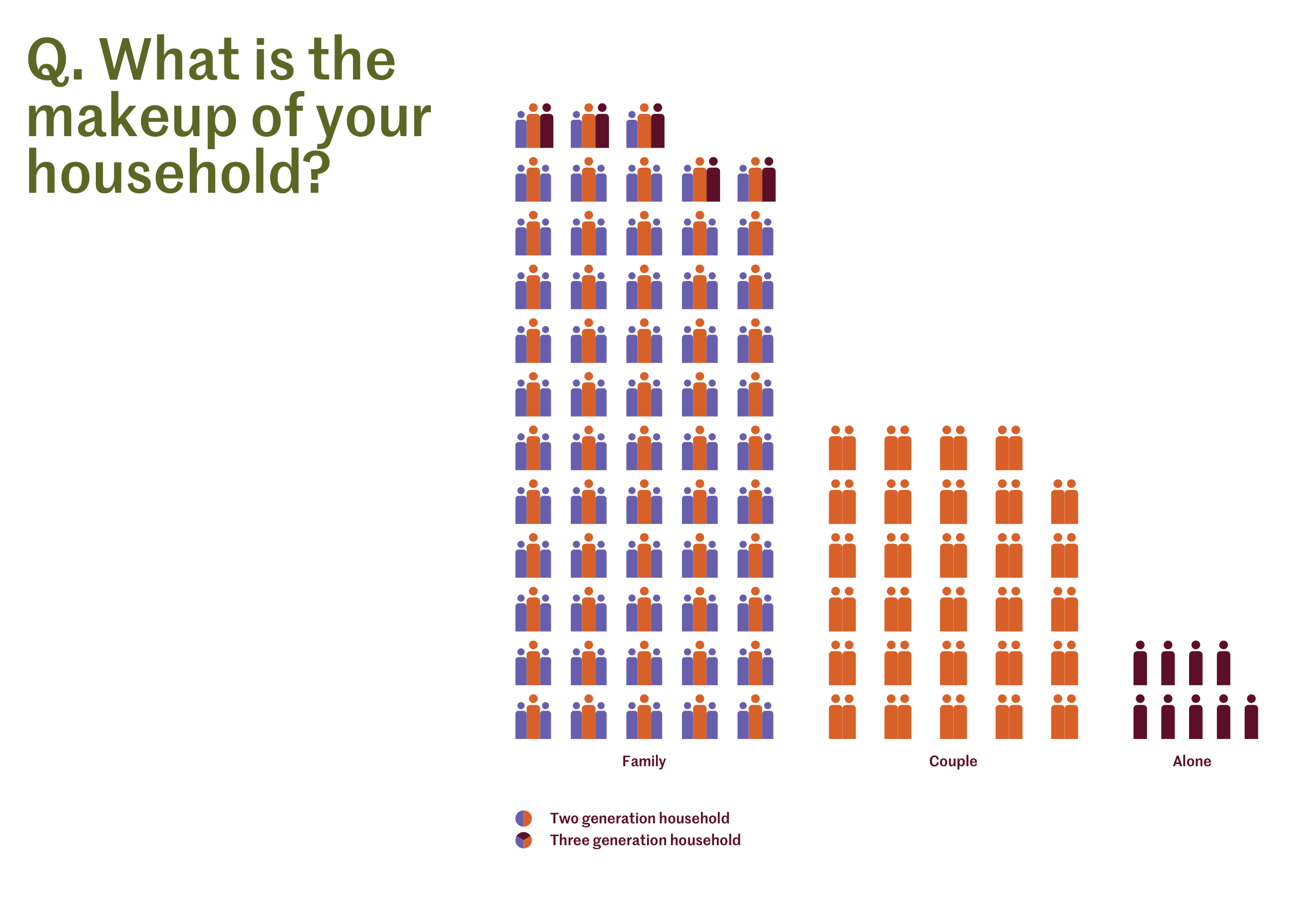
A chart showing household makeup: family with mostly three-generation households, couples with mostly two-generation households, and alone with mostly single-person households, represented by icons in orange, purple, and dark purple respectively.

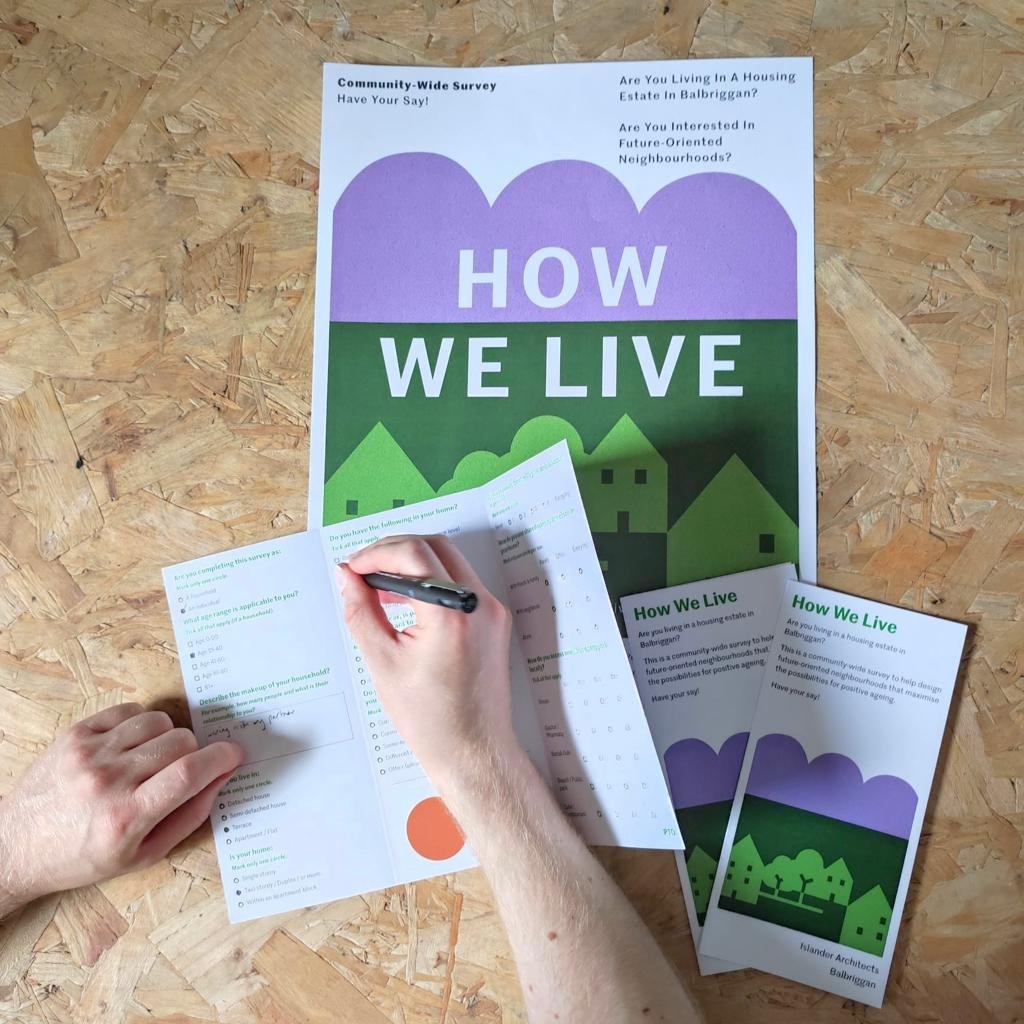
The topic of housing is a huge area for debate, we need to make time to listen and learn directly from our communities. Supported by a local "How We Live" survey, our findings showed that 83% of residents want to remain in their homes as they grow older.

This underscore the urgent need to modify existing neighbourhoods.
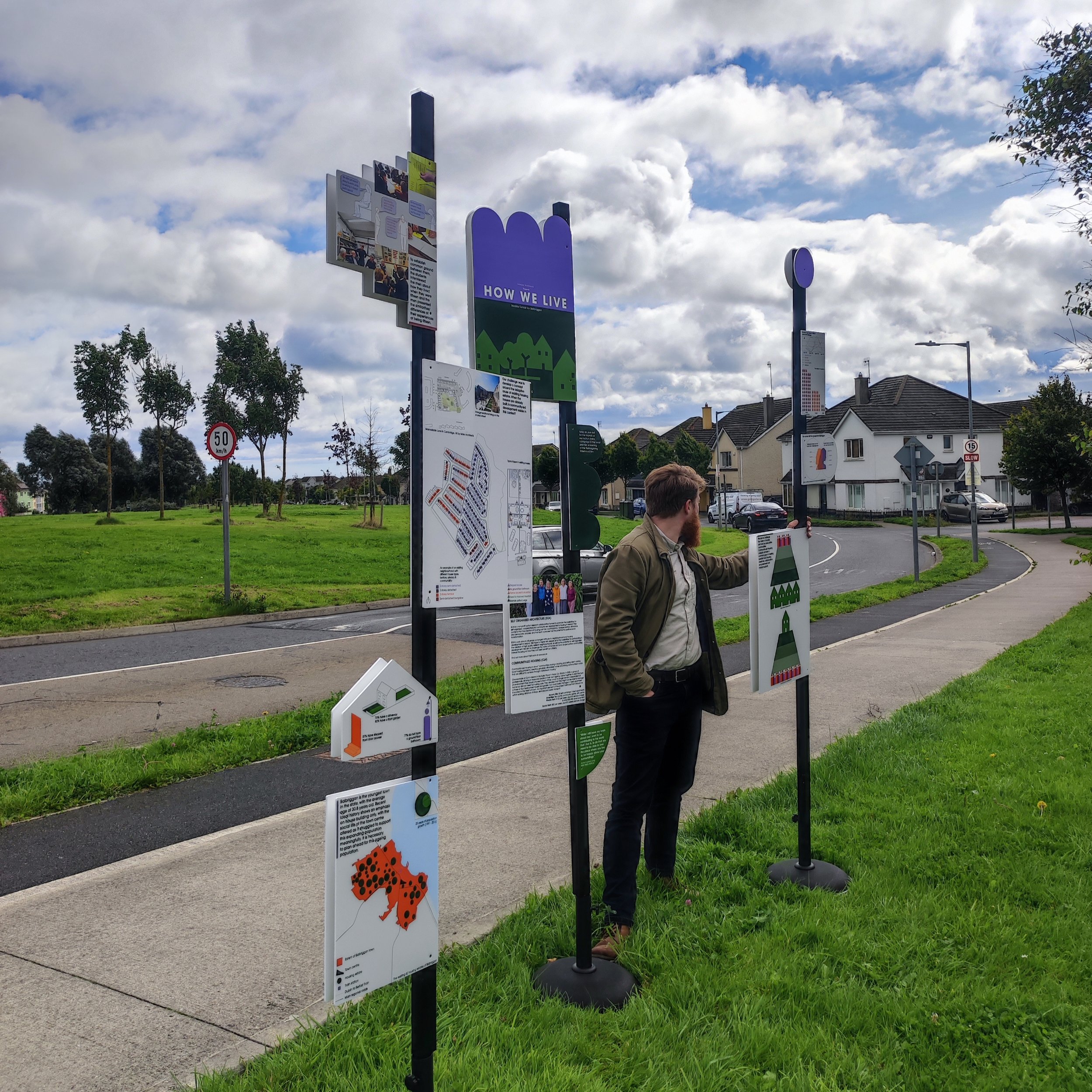
A man with a beard and glasses stands on a sidewalk in front of informational signs and maps at a park or community area, with a grassy field and residential houses in the background.
A person filling out a survey questionnaire titled 'How We Live' on a wooden surface, with a brochure and a poster related to community housing in Balbriggan.
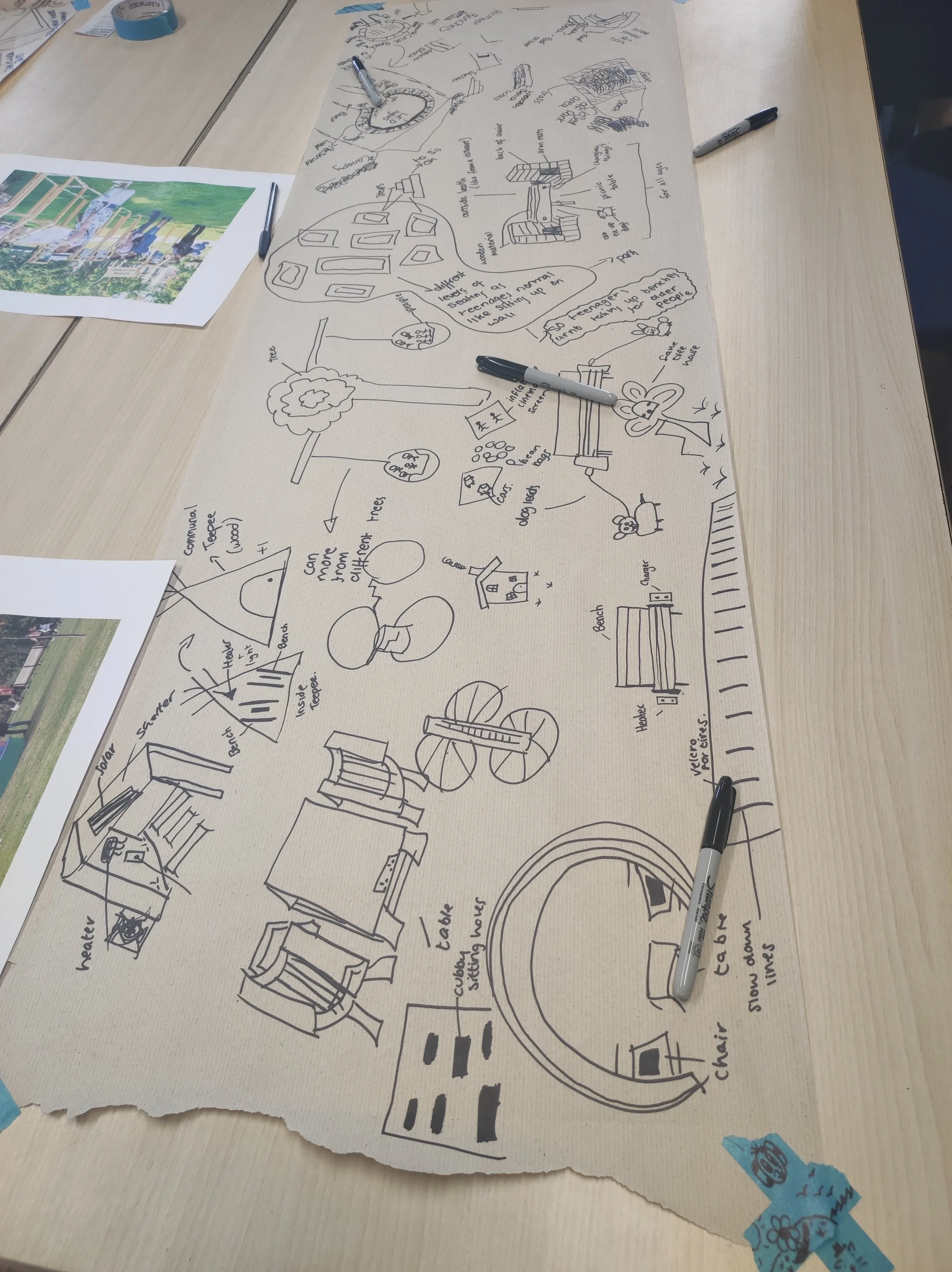
Hand-drawn diagram on a long sheet of paper showing a community map with sketches of trees, houses, benches, a bike, a playground, and labeled areas including a street, beach, and food trucks, with markers scattered around.
Color-coded map of a residential neighborhood showing streets and blocks with various houses marked in different colors, and a surrounding natural landscape.
Survey question with pie charts showing 83% would stay in their current home and 33% would like to modify their home.
Three older men sitting at a table engaged in a serious discussion, with papers and pens in front of them, in a cluttered room with shelves and framed picture in the background.

This project moved beyond community engagement to function as regional policy research. A key factor in the success of this proposal was to develop an awareness of existing housing policy and how to lobby effectively for change.

The workshops questioned the lessons learnt from Balbriggan’s recent growth, and explored the experience of older people in this young satellite town. Can younger people now develop an interest in suburban design that will have a positive influence on housing policies in the future?

To empower residents to demand systemic changes from local government, we transformed our spatial findings into a touring mobile exhibition that travelled directly to suburban housing estates. By showcasing options for positive, community-led aging, this work positions our practice as a key research partner for public bodies and local authorities seeking to develop resilient, age-friendly civic infrastructure.

A person holding a yellow housing application form among other similar forms on a flat surface.

Drawings: Islander Architects

Photography: Islander Architects

Funded by: SOA Self Organised Architecture