

Exhibit A
Type: Exhibition & Public Engagement
Client: Irish Architecture Foundation
Exhibition: IAF House, Charlemont Square, Saint Kevin's, Dublin
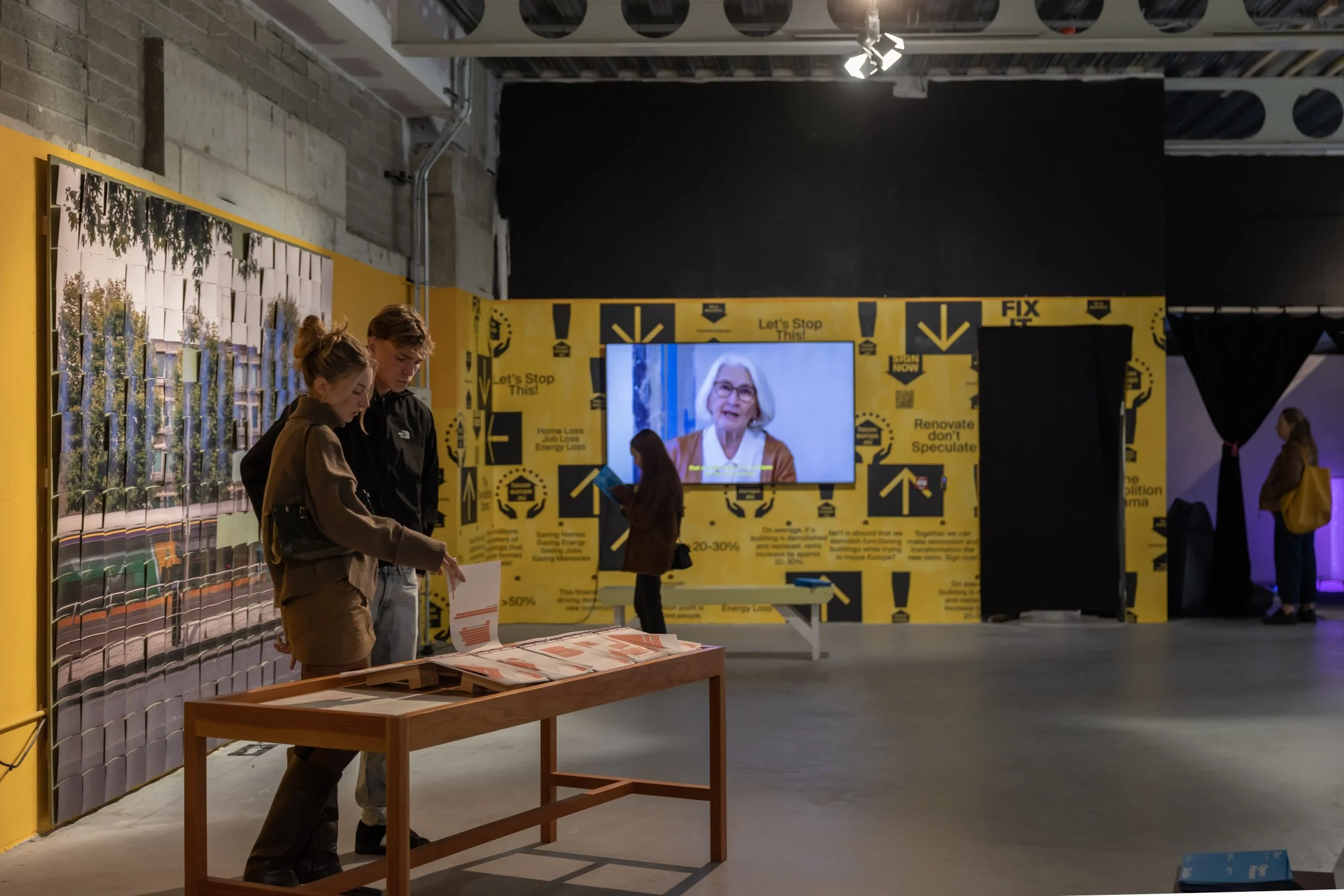
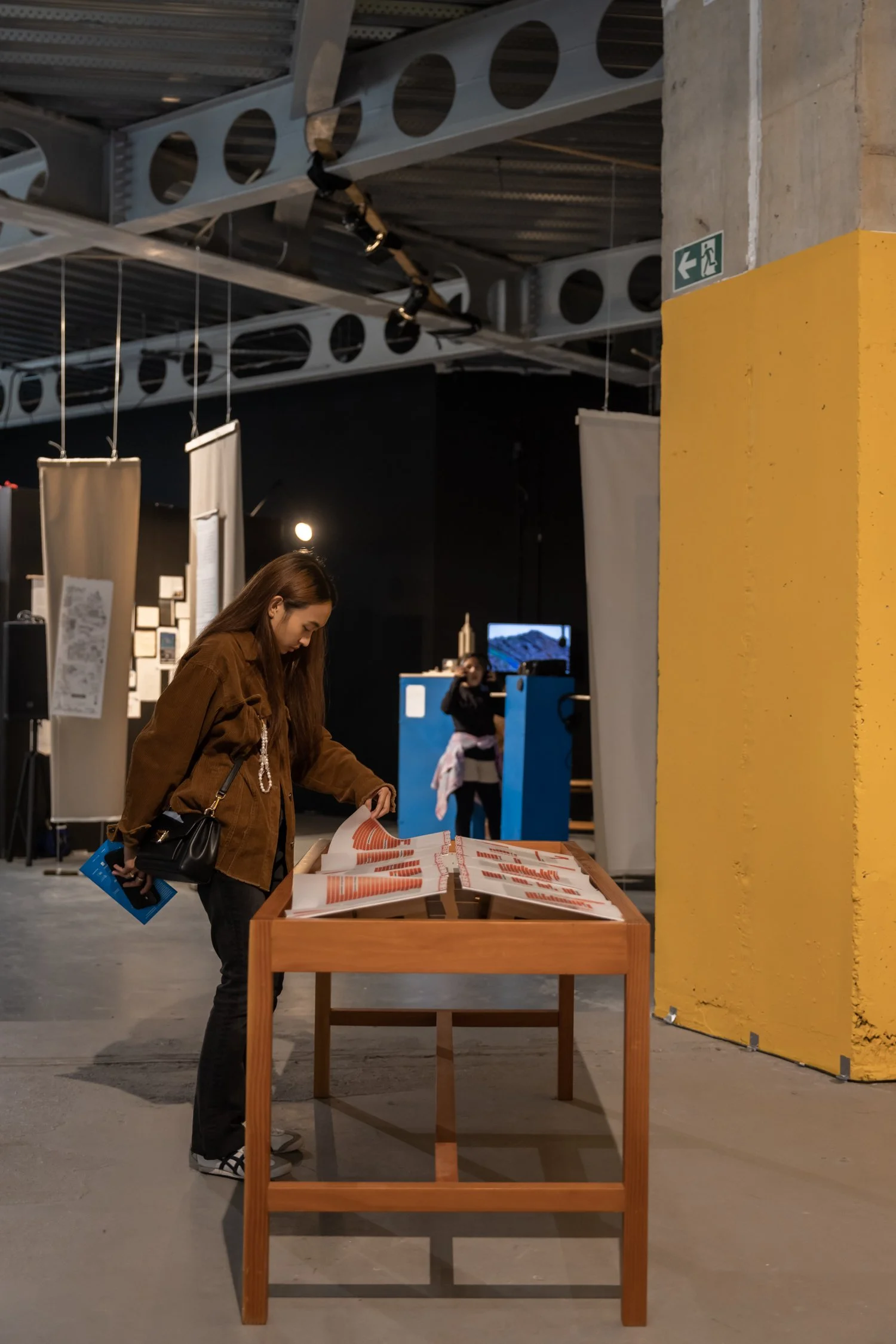
Commissioned by the Irish Architecture Foundation for Open House Dublin, Exhibit A operates as a spatial research campaign and a direct critique of speculative urban development. In collaboration with the European activist group HouseEurope! we curated a "table of evidence" at IAF House to unpack the hidden economic and environmental costs of demolition.
This exhibition & supporting discussion prompted collective local action against our self-destruction.
This campaign establishes our practice as an active player in the circular economy, capable of guiding public bodies and commercial clients away from the carbon and financial liabilities of demolition toward viable, adaptive reuse strategies.
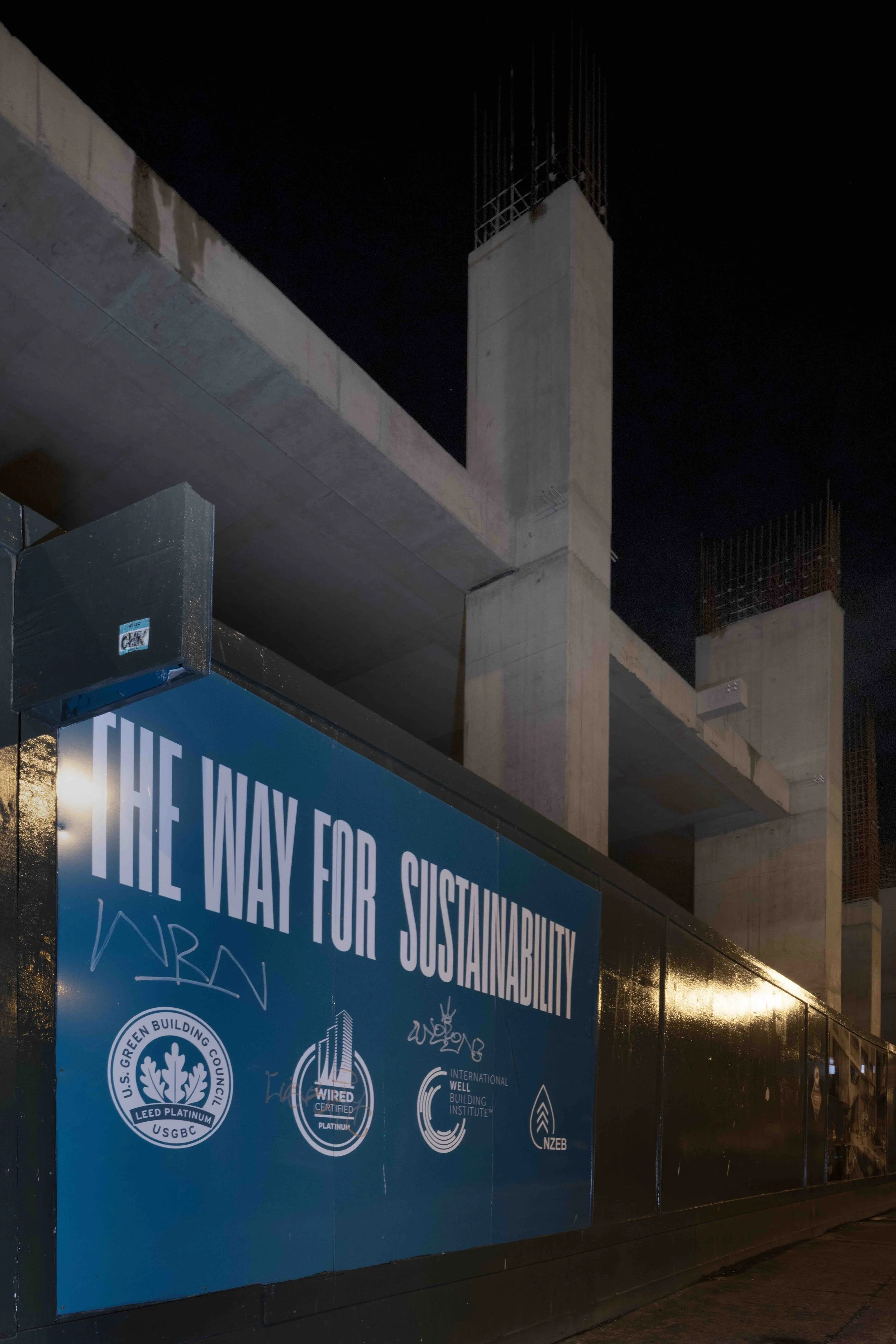
Leading the way for sustainability?
Exhibit A, presented a table of evidence, demonstrating the dangers with speculative development for our built environment. This evidence highlights the risks with building anew as opposed to renovating existing buildings or adapting them for new uses. To demolish and rebuild requires exposure to a volatile real estate market.
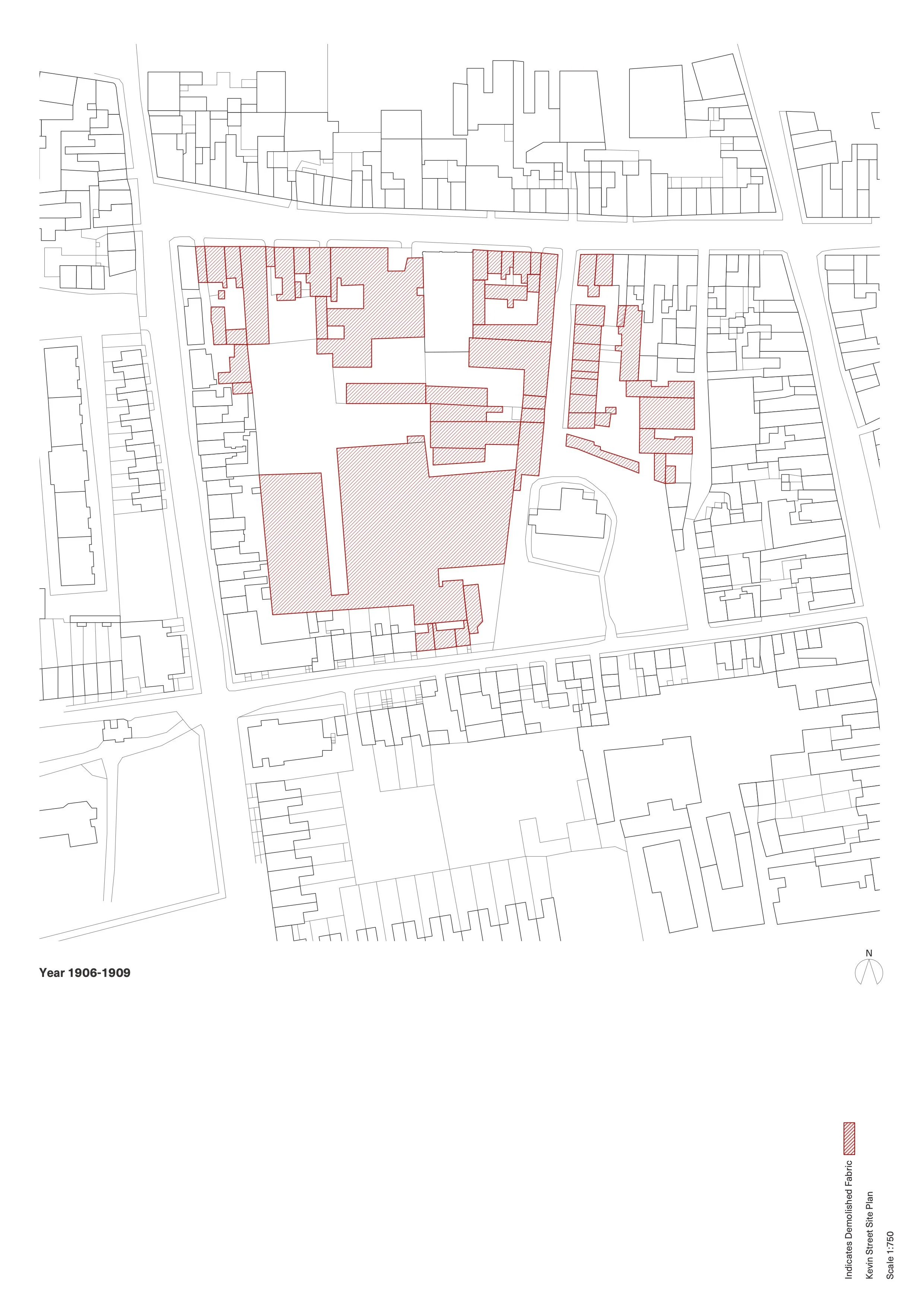
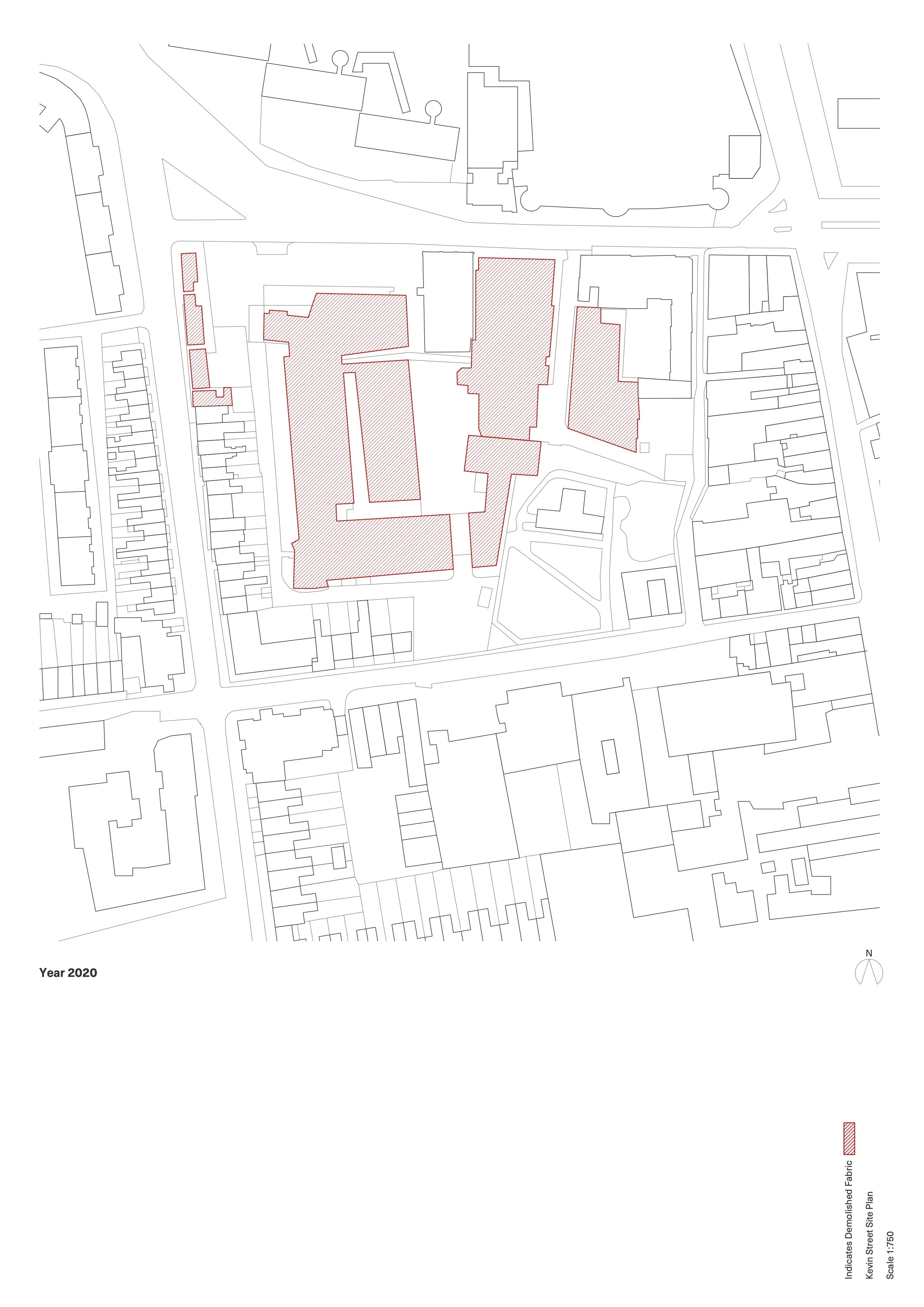
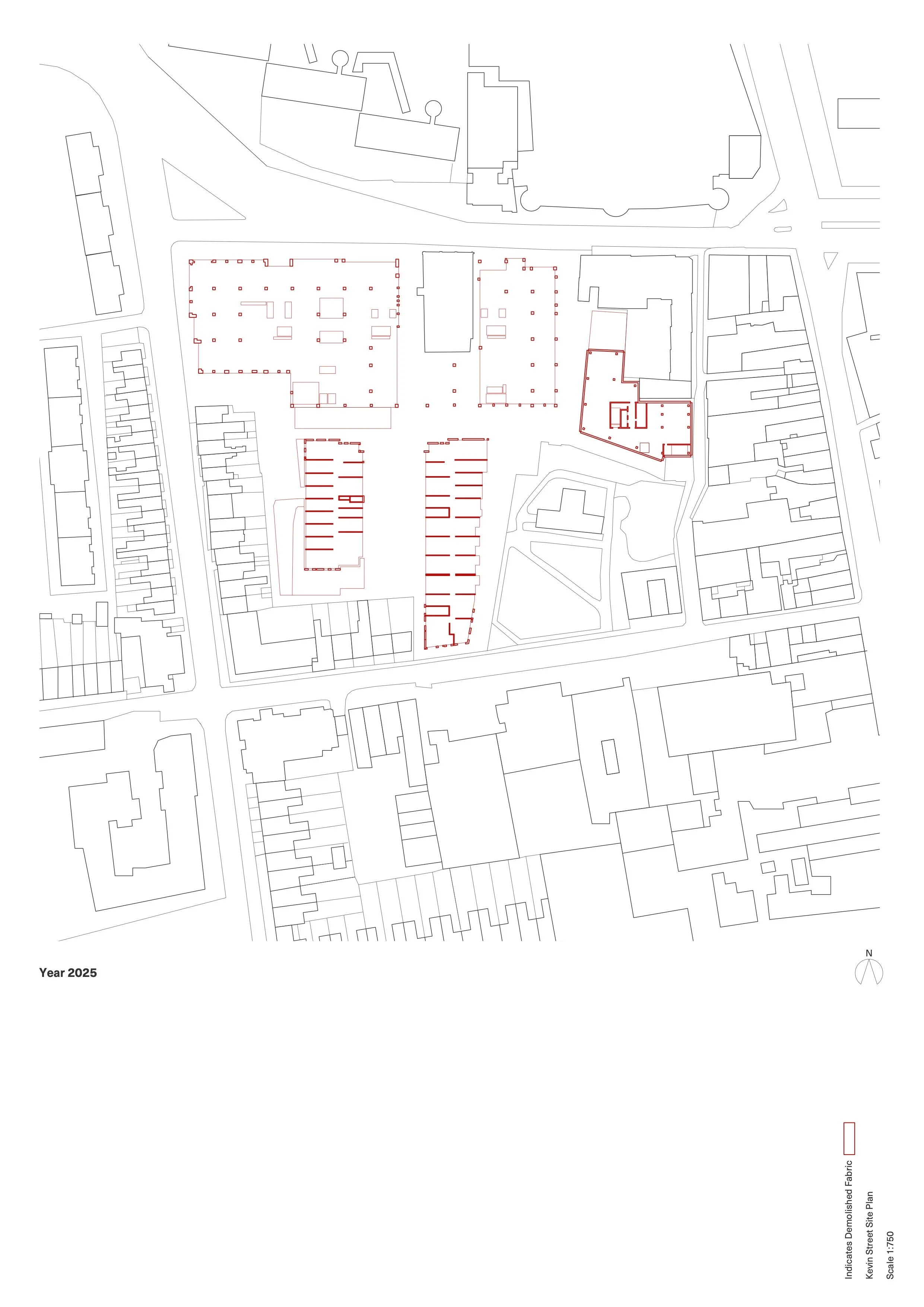
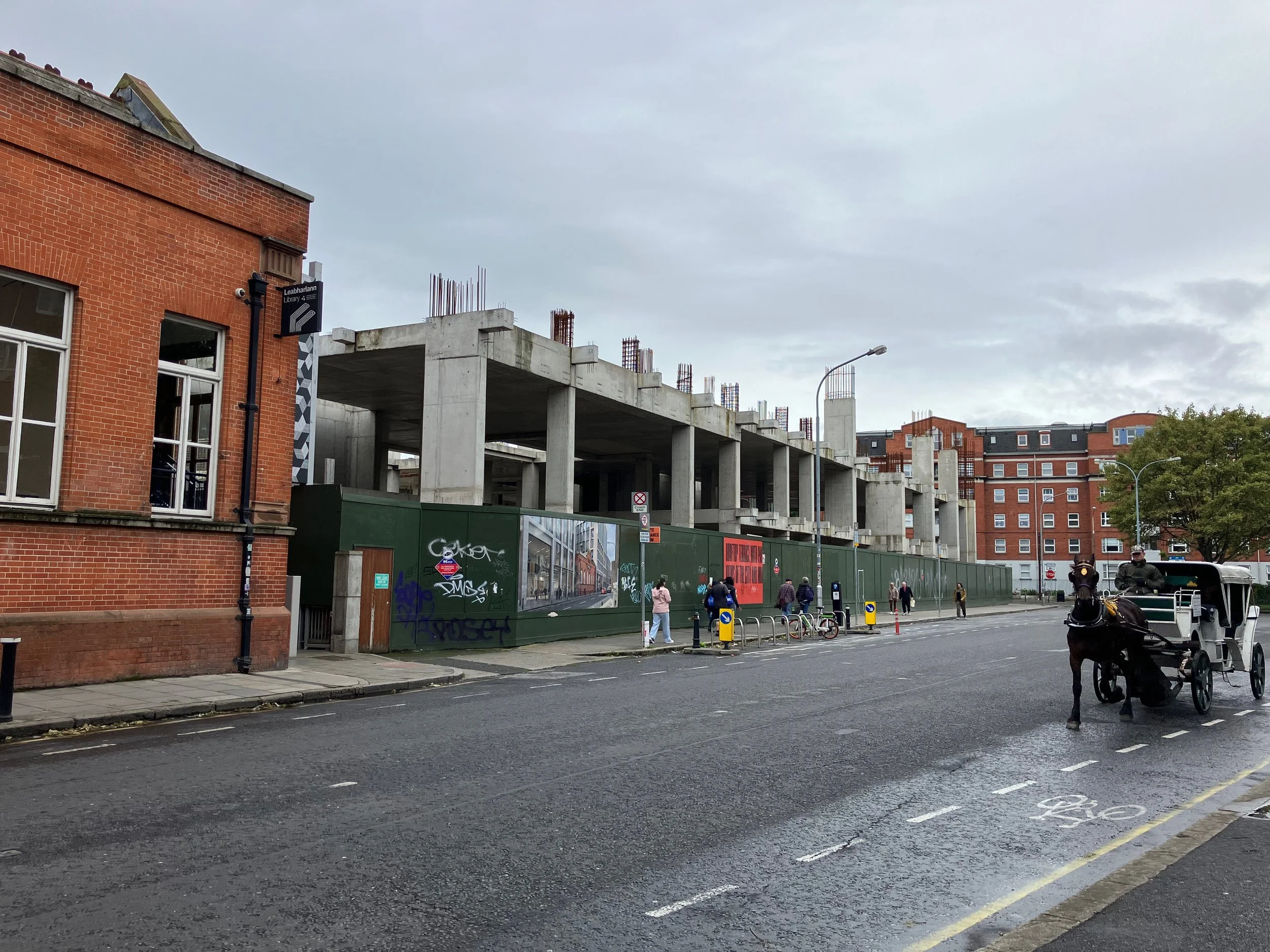
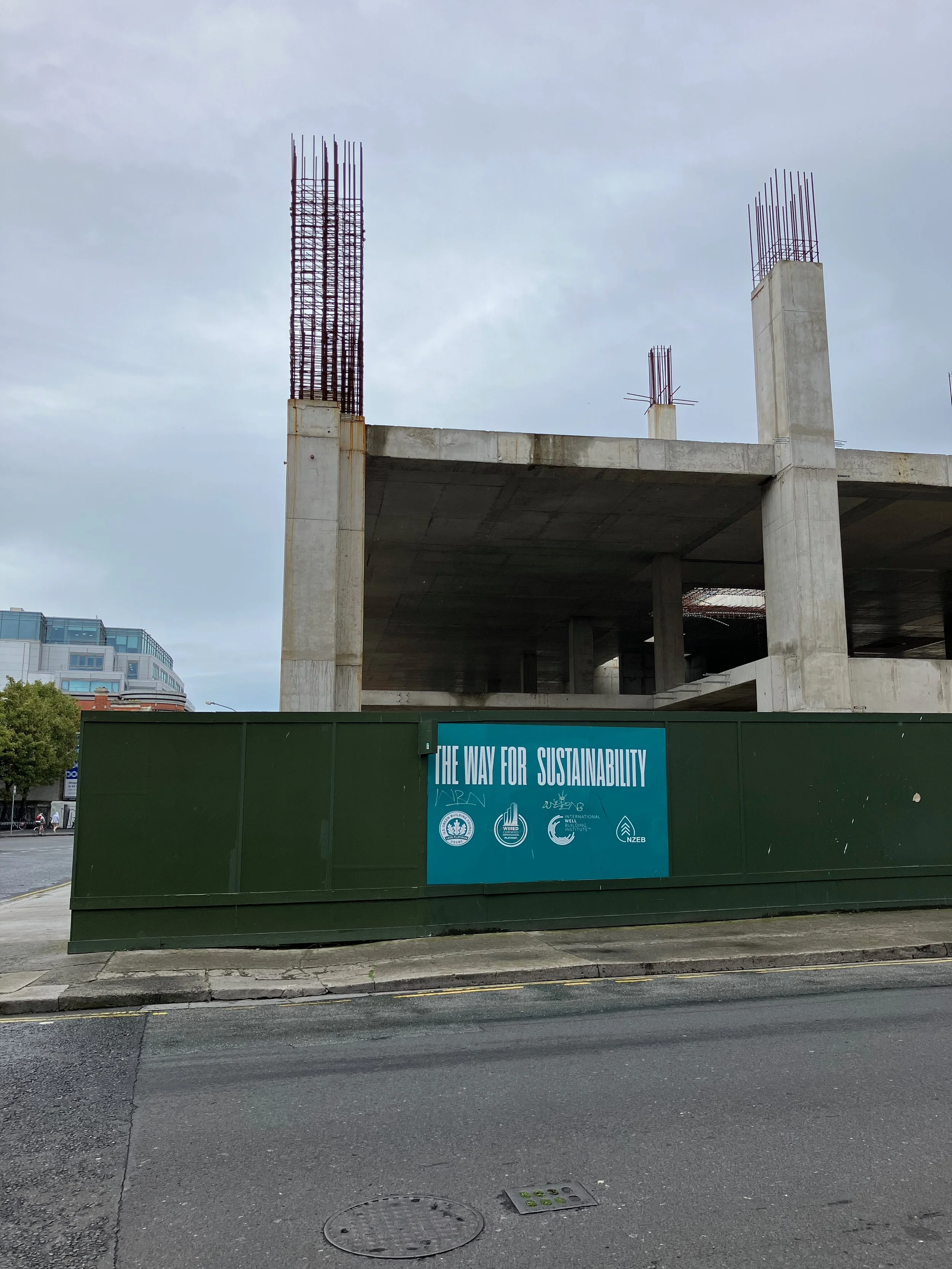
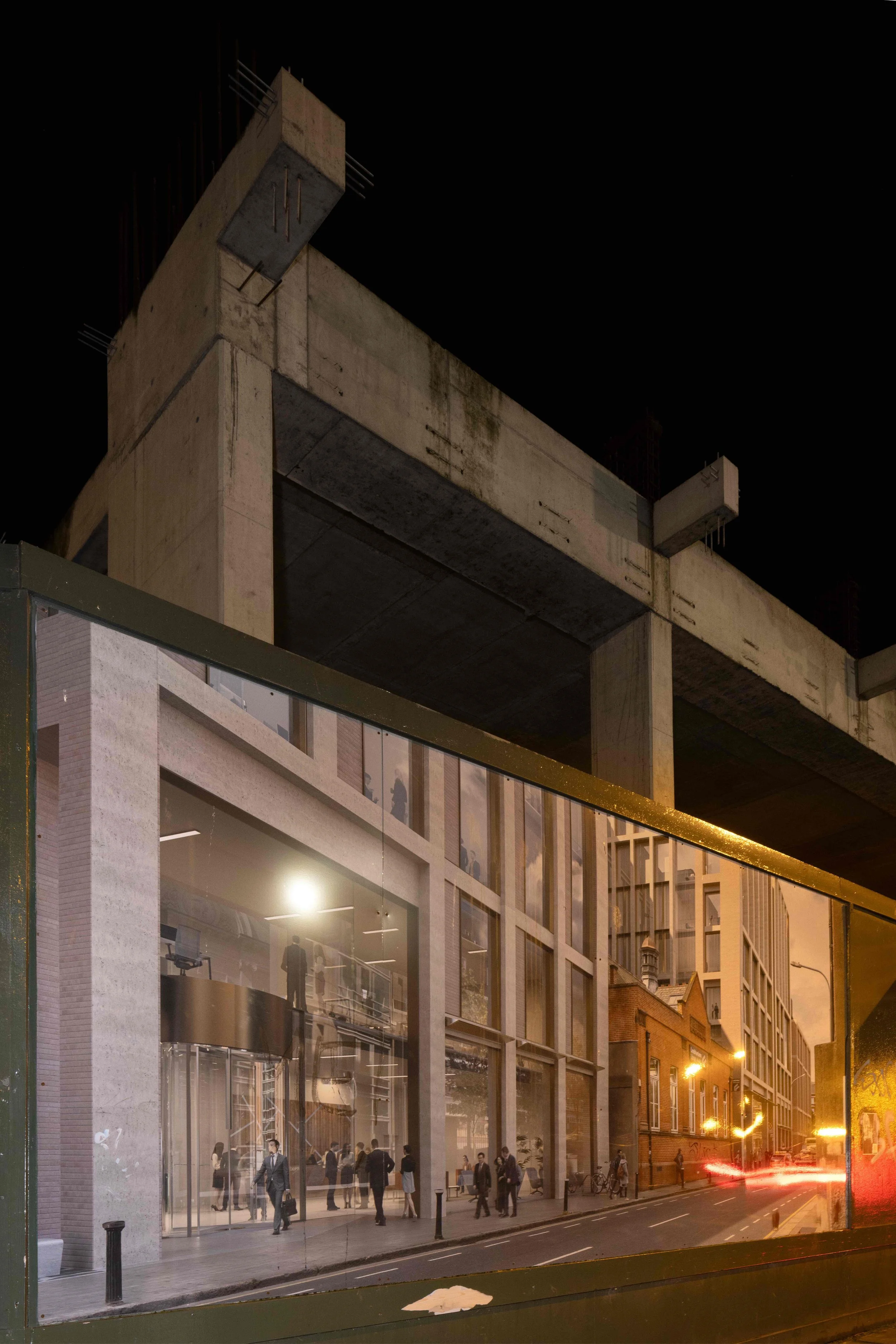
This case study, advertised today as ‘Camden Yard’ is located at the heart of Kevin Street Lower, New Bride Street, Camden Row and Wexford Street. In August 2019, this 3.57 acre site was purchased by a developer for €140 million (guide price €80 million). The 50 year old former DIT Kevin Street Campus was demolished to make way for a mixed-use development of offices/retail for 4,000 people and 299 residential units. Site works commenced in 2022, €65 million was spent on demolition, excavation and construction. Works halted in 2024 and receivers were appointed. It is now up for sale, in its partially completed state, boasting that the development is ‘an exemplar in sustainability with NZEB standards, with a reduced carbon footprint..’
Its current condition, between rubble and regret, is evidence that there are buildings emerging from the ground today that are already becoming empty, unused, and are more likely to be demolished in the near future.
Mapping Erasure
These three site plans represent the changes to the site layout over a period of 120 years. They chart the scale of demolition that has impacted the built and cultural environment that surrounded this city centre site. Also shown is the current as-built condition left by the developer last year.
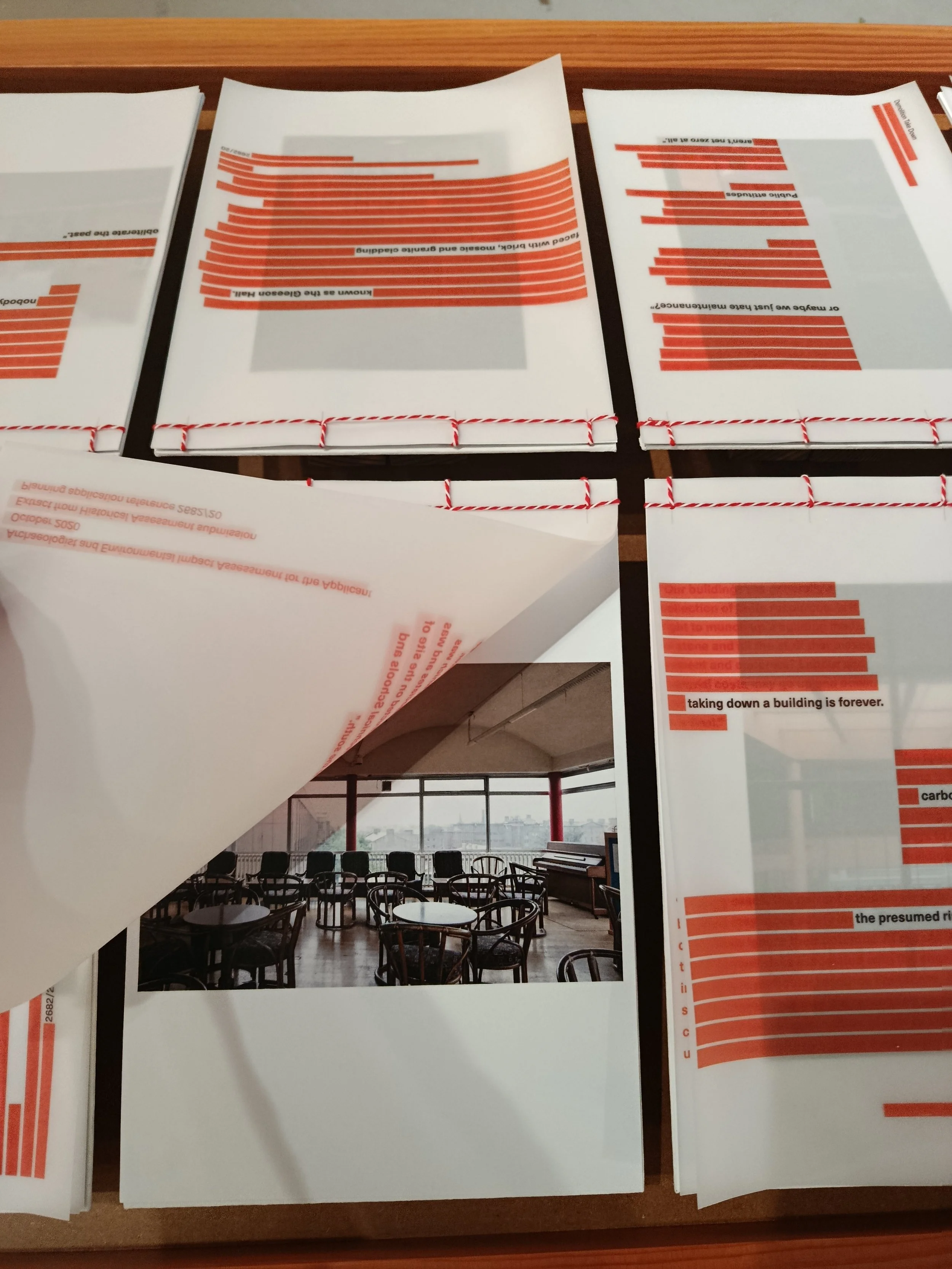
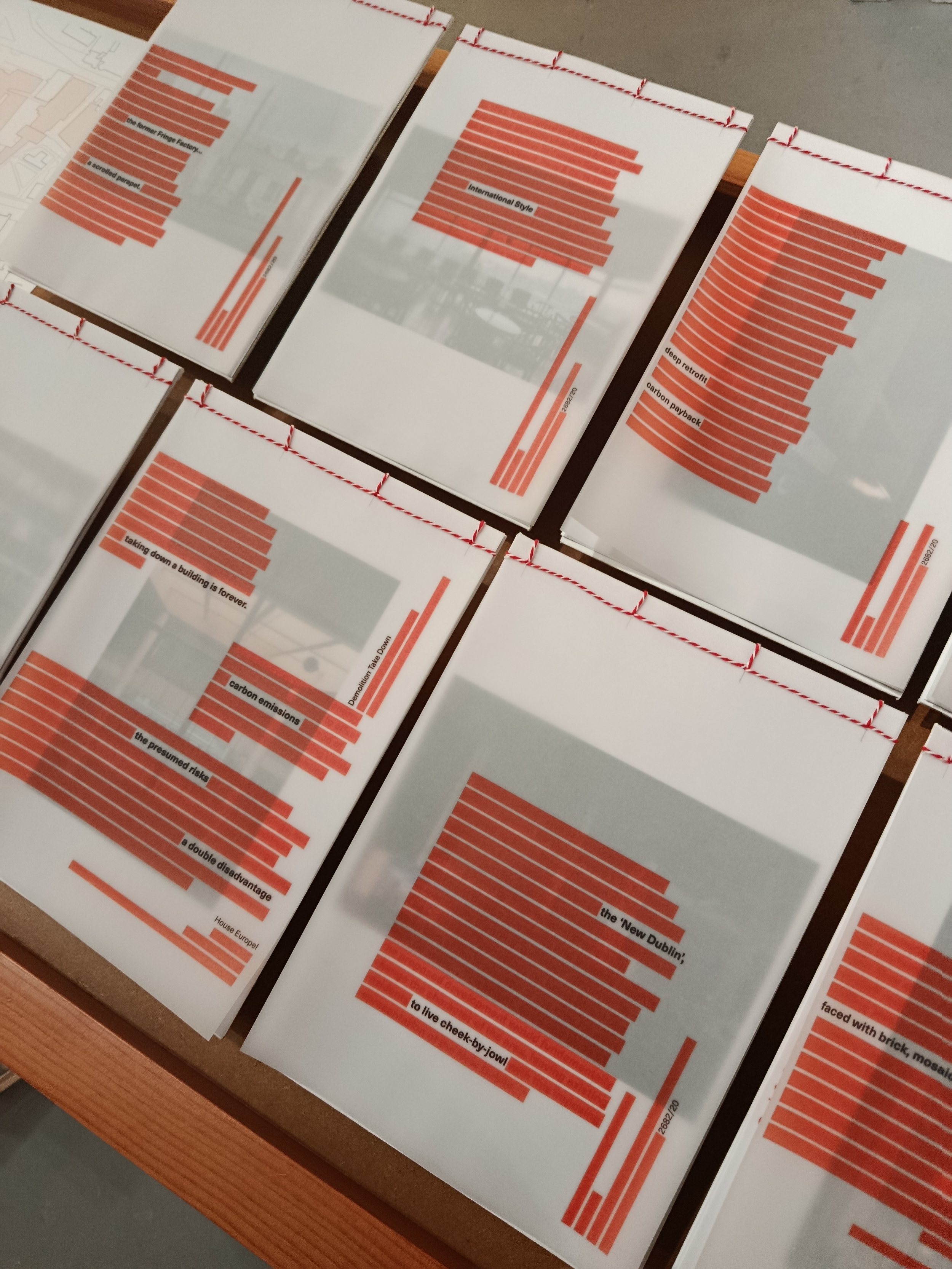
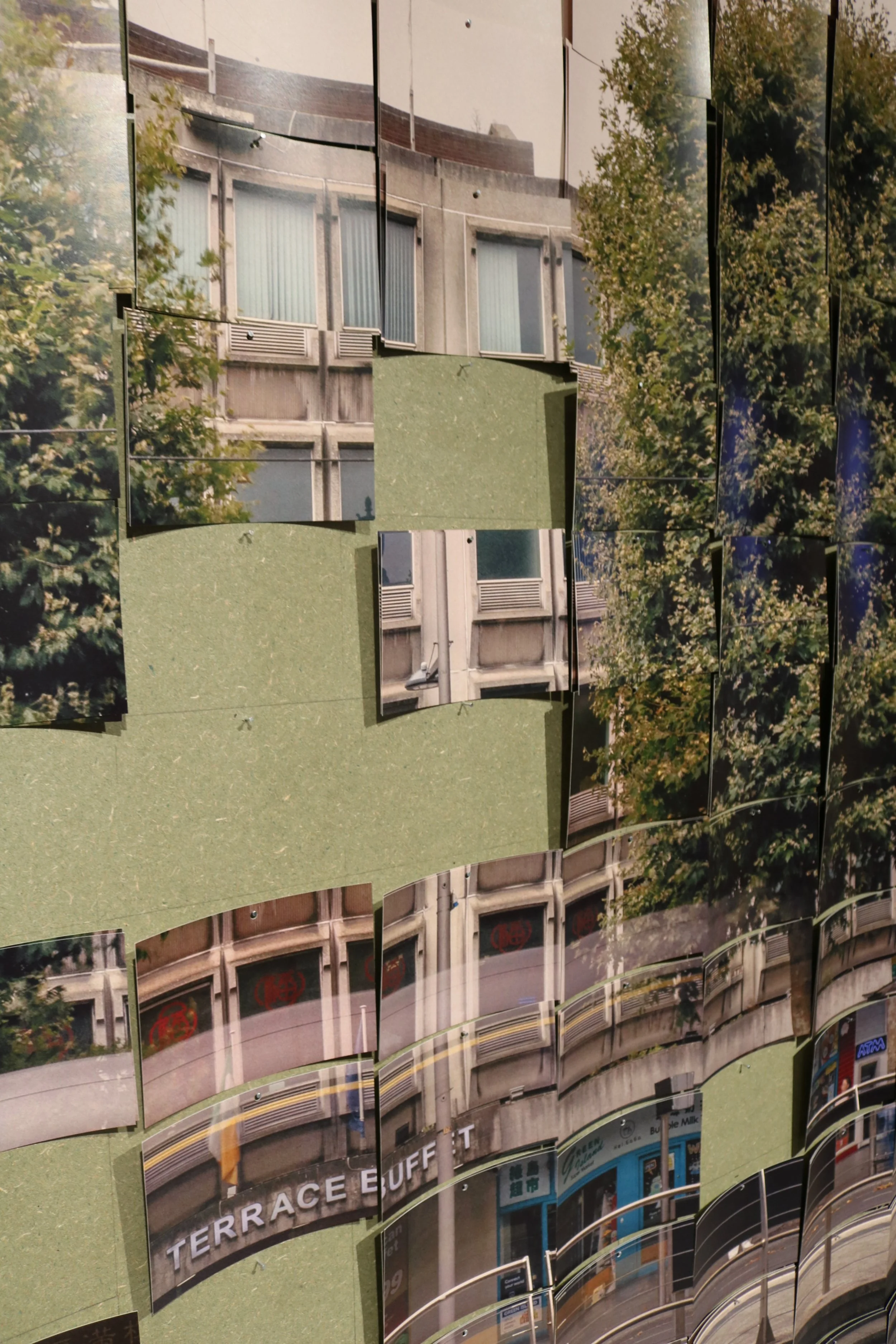
We invited visitors to flick through the A4 evidence presented. The former and current conditions of the site have been documented through photography, from the State commissioned archive (Paul Tierney, 2020) and the site’s current condition today (Paul Tierney & Islander, 2025).
These images are obscured by layers of quotes and redactions. The quotes are taken from a series of interviews from Islander Architects' Demolition Take Down project along with selected excerpts from the Camden Yard planning application documents and public observations.
Key words are left visible, a prompt to consider your experience of erasure, memory, change and the unknown futures of our city.
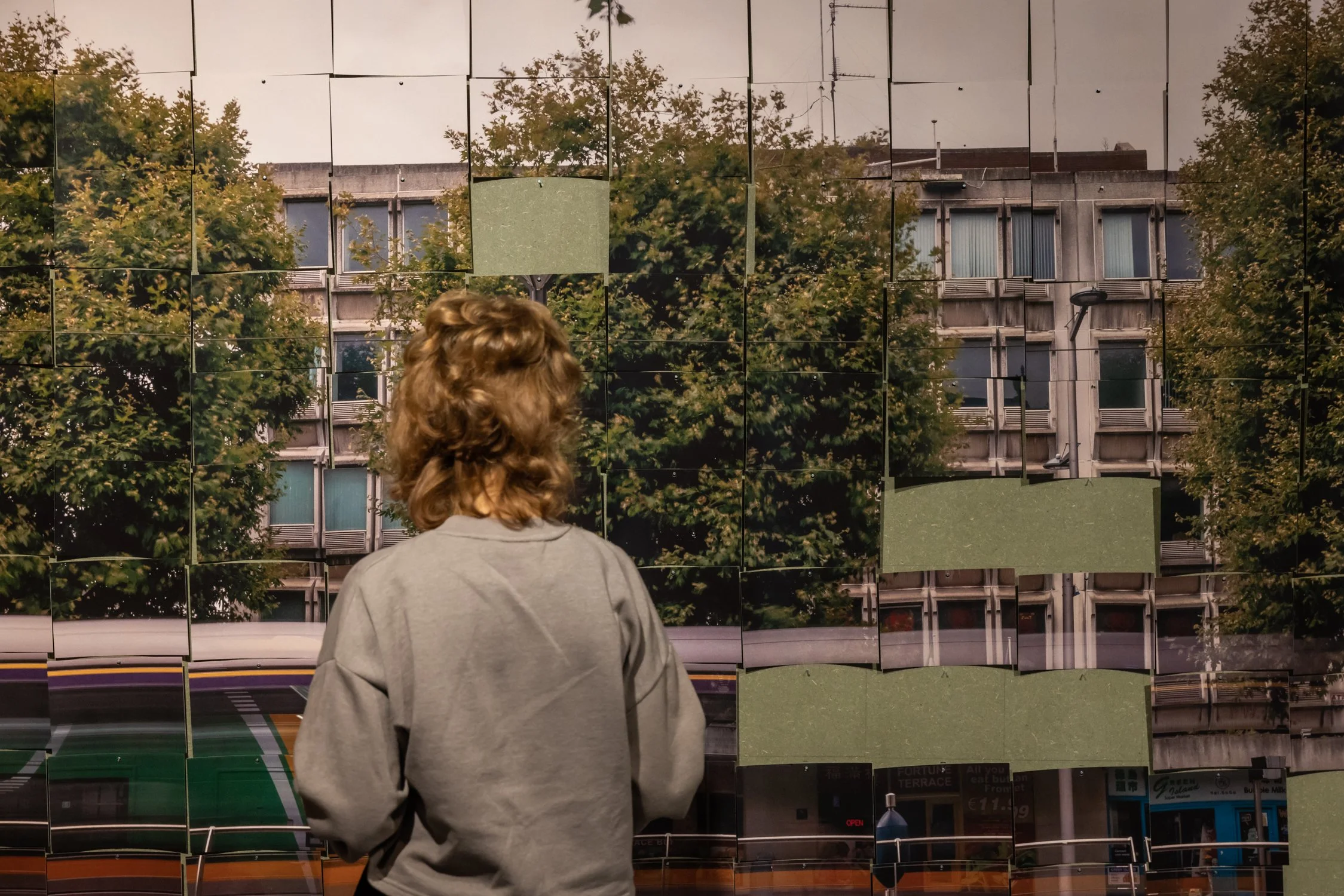
A large format photograph (by Rich Gillian) depicts a building on O’Connell street, which is due for demolition along with 22,500 square meters of buildings on the street in the near future.
This image has been divided up into postcards, encouraging visitors to takeaway a portion of the building home with them.
Over the course of the Open House Dublin festival, the image will be erased leaving people with a distorted perception of what it once was, while feeling a sense of loss for what is no longer there.

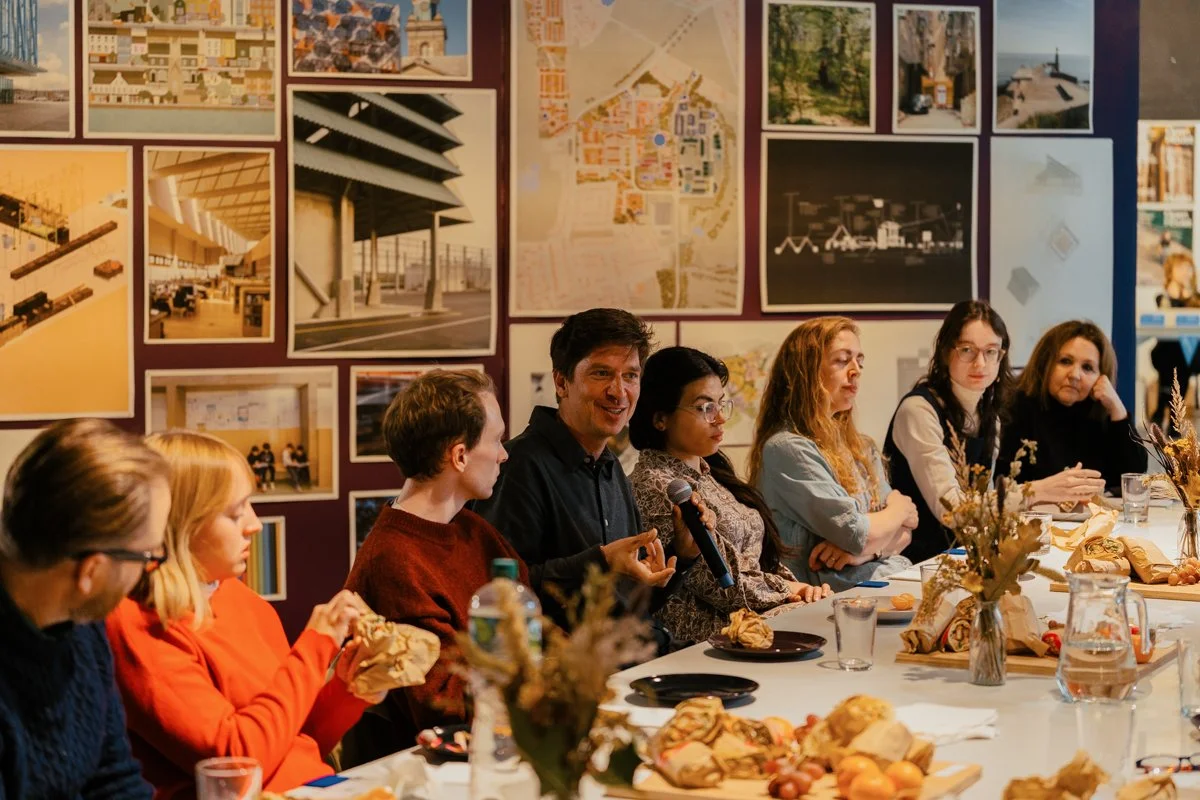
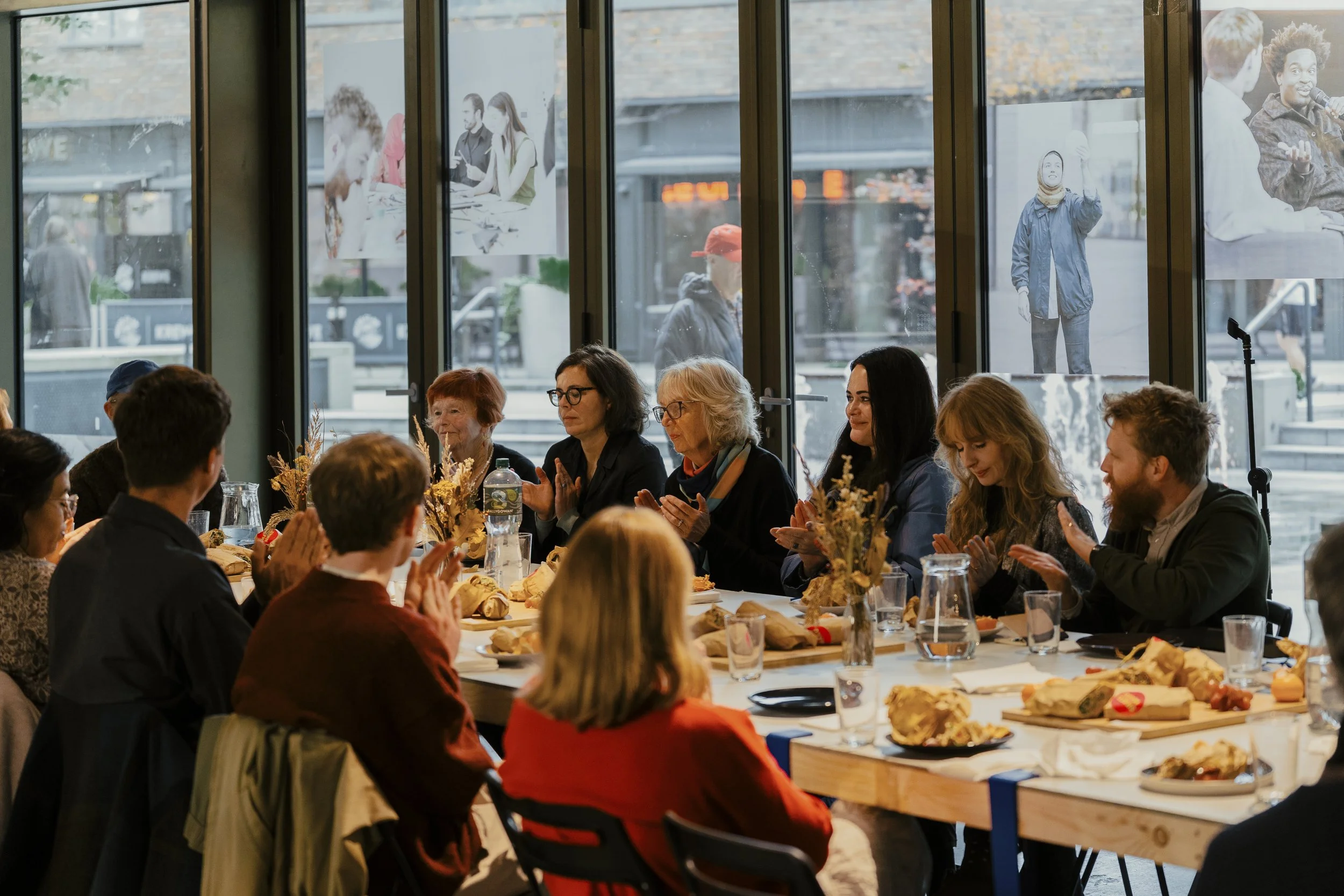
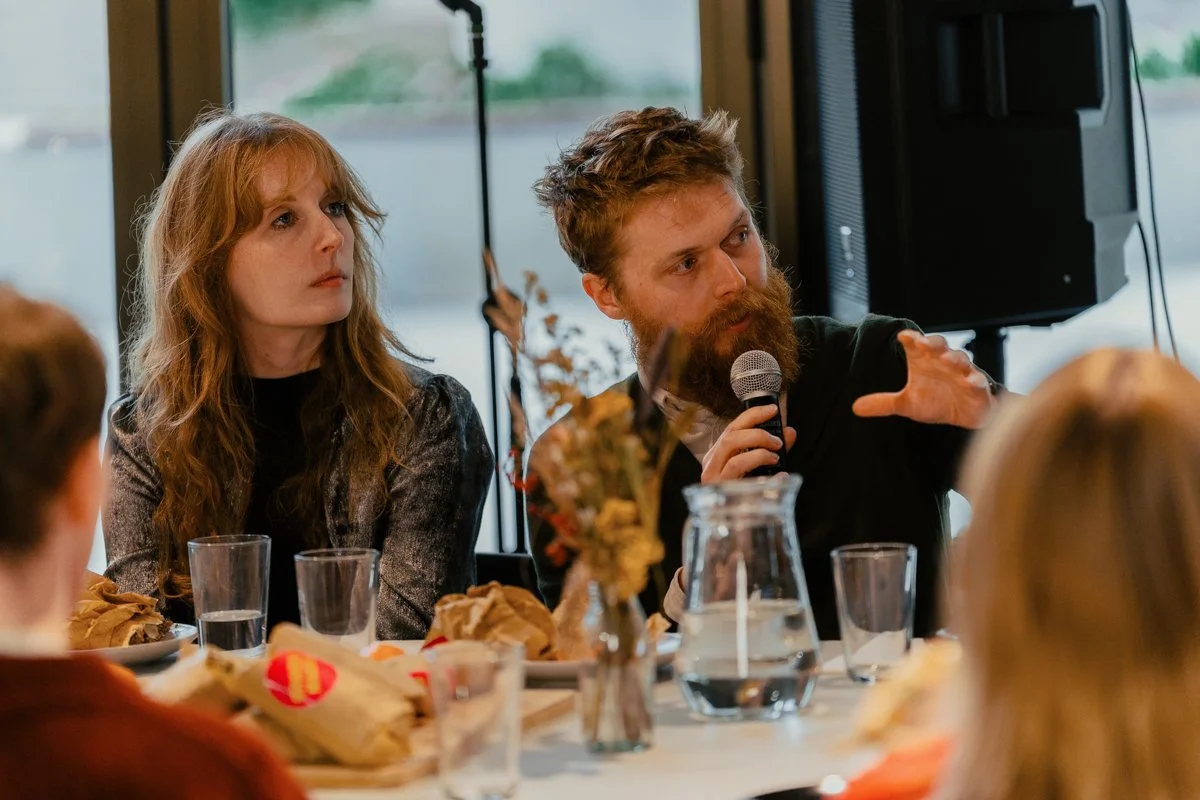
Open Table: Demolition was hosted by Islander Architects and Ludwig Engel- a spatial researcher and fellow HouseEurope! Campaigner.
The discussion asked:
Does it matter if we demolish buildings? What do we lose versus what do we gain? We unpacked the myths behind the need for demolition in cities and showed how reusing what we have is better value for money and our future heritage.
Open Table 2025 empowered people to participate in expert-led discussions on the topics of Diaspora, Diversity, Design, Demolition and Democracy.

Drawings: Islander Architects
Event Photography: Ste Murray (Exhibition) & Myles Shelly (Open Table)
Photography used in exhibition: Rich Gilligan & Paul Tierney